
Key Takeaways
- The Near Work Impact: Prolonged screen use strains developing eye muscles and is a primary environmental factor in the progression of myopia (nearsightedness).
- Blink Rate Drops: Children blink up to 60% less when using digital devices, leading to adult-level dry eye symptoms and oil gland atrophy.
- Advanced Detection: Spectacle PDX uses Optomap technology to provide a 200° ultra-widefield view of the retina, often avoiding the need for stressful dilation drops.
- Lifestyle Balance: Implementing the 20-20-20 rule and ensuring at least 90 minutes of daily outdoor time can significantly protect a child’s vision.
- Confidence in Eyewear: Curated, high-quality designer frames ensure a proper fit and a positive self-image for kids and teens.
Introduction
In the heart of Portland and Beaverton, our lives are increasingly digital. From Chromebooks in the classroom to smartphones at the dinner table, our children are growing up in a world of pixels. While technology opens doors to learning and connection, it also presents a new challenge for children’s vision health.
Digital Reality – Modern children are the first generation to spend the majority of their developmental years looking at high-definition screens.
At Spectacle PDX, we see the impact of this digital shift every day. Parents often come to us wondering if a tablet is the reason their child is squinting or why their teen is complaining of frequent headaches after homework. Understanding how screen time eye health works is essential for every modern family. Protecting these developing eyes requires a blend of smart habits and advanced eye exam technology that catches issues before they interfere with a child’s success in school and life.
The Evolution of Eye Care: A Modern Approach for Young Patients
For many parents, the memory of an eye exam involves stinging yellow drops and the dreaded “air puff” test. Fortunately, eye care has evolved. At Spectacle PDX, we believe that a comprehensive eye exam in Portland should be as stress-free as possible, especially for kids and teens.
Why Spectacle PDX is Different:
- No-Drop Eye Exam: We utilize the Optomap, an ultra-widefield imaging system that captures a 200° view of the retina in seconds.
- Gentle Pressure Checks: We’ve replaced the startling “air puff” with modern, gentle technology.
- Personalized Connection: Our doctors spend more time with each family to explain findings conversationally.
TIP: Dilation Nuance – While Optomap is a powerful alternative for screenings, traditional drops may still be used if high-risk pathology is suspected.
How Digital Habits Shape Developing Vision
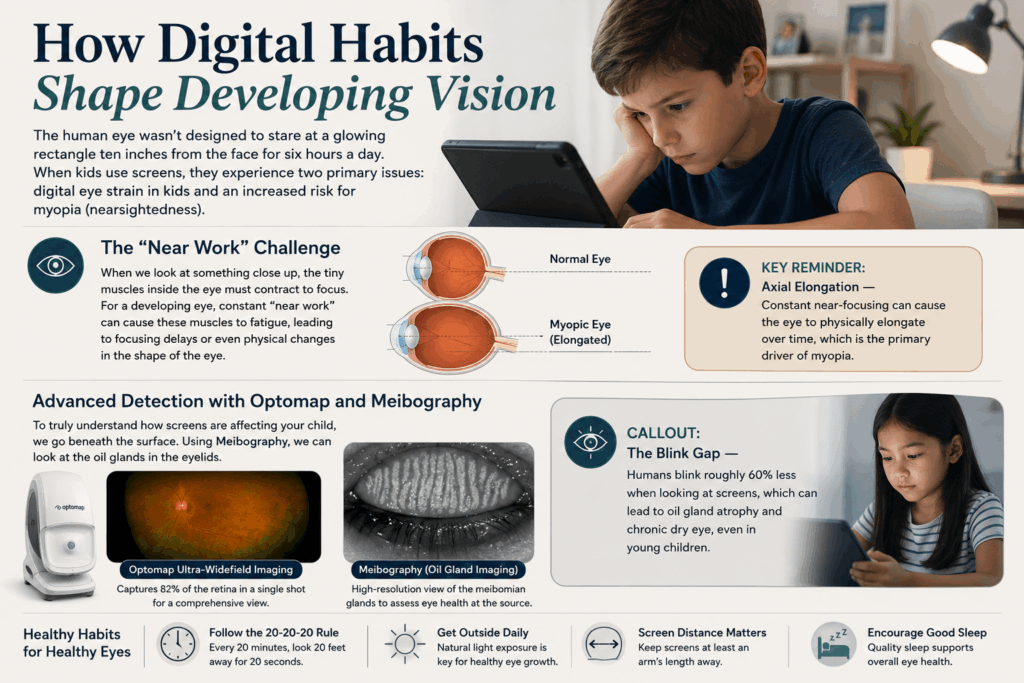
The human eye wasn’t designed to stare at a glowing rectangle ten inches from the face for six hours a day. When kids use screens, they experience two primary issues: digital eye strain in kids and an increased risk for myopia (nearsightedness).
The “Near Work” Challenge
When we look at something close up, the tiny muscles inside the eye must contract to focus. For a developing eye, constant “near work” can cause these muscles to fatigue, leading to focusing delays or even physical changes in the shape of the eye.
Key Reminder:
Axial Elongation – Constant near-focusing can cause the eye to physically elongate over time, which is the primary driver of myopia.
Advanced Detection with Optomap and Meibography
To truly understand how screens are affecting your child, we go beneath the surface. Using Meibography, we can look at the oil glands in the eyelids.
The Blink Gap Humans blink roughly 60% less when looking at screens, which can lead to oil gland atrophy and chronic dry eye, even in young children.
Addressing Specific Concerns: Myopia and Dry Eye
As a premier provider of dry eye treatment in Beaverton and Portland, we focus on three specific areas for our younger patients:
- Myopia Control: We offer strategies to slow down the progression of nearsightedness, protecting the long-term health of the retina.
- Dry Eye Relief: We provide clinical-grade solutions that address the root cause of the irritation.
- Binocular Vision: Screens can disrupt how the two eyes work together, causing eye teaming or tracking issues.
Expert Quote: “We are seeing adult-level eye issues in children at much younger ages. Our goal is to use advanced diagnostics to intervene before these habits lead to permanent vision changes.” – The Spectacle PDX Clinical Team
The Eyewear Experience: Where Style Meets Protection
If your child or teen needs a prescription, the “glasses talk” doesn’t have to be a bummer. At Spectacle PDX, we offer a curated selection of designer frames in Beaverton and Portland that kids actually want to wear.
Beyond the “Big Box” Chains:
- Durability and Fit: High-quality materials like titanium and premium acetate.
- Superior Lens Technology: Specialized coatings to reduce glare from classroom lights and screens.
- Blue Light Nuance: While primarily for comfort rather than protection from damage, blue light filters can improve contrast for heavy screen users.
Tip:
The Confidence Factor – A child who feels confident in their eyewear is significantly more likely to wear their glasses consistently.
Making Eye Care Easy for Portland Families
We know Portland parents are busy. Between soccer practice in Beaverton and weekend trips to the coast, your time is valuable.
Clinic Amenities – Online scheduling, transparent insurance navigation, and a boutique environment designed to put children at ease.
Tips for Maintaining Healthy Screen Habits
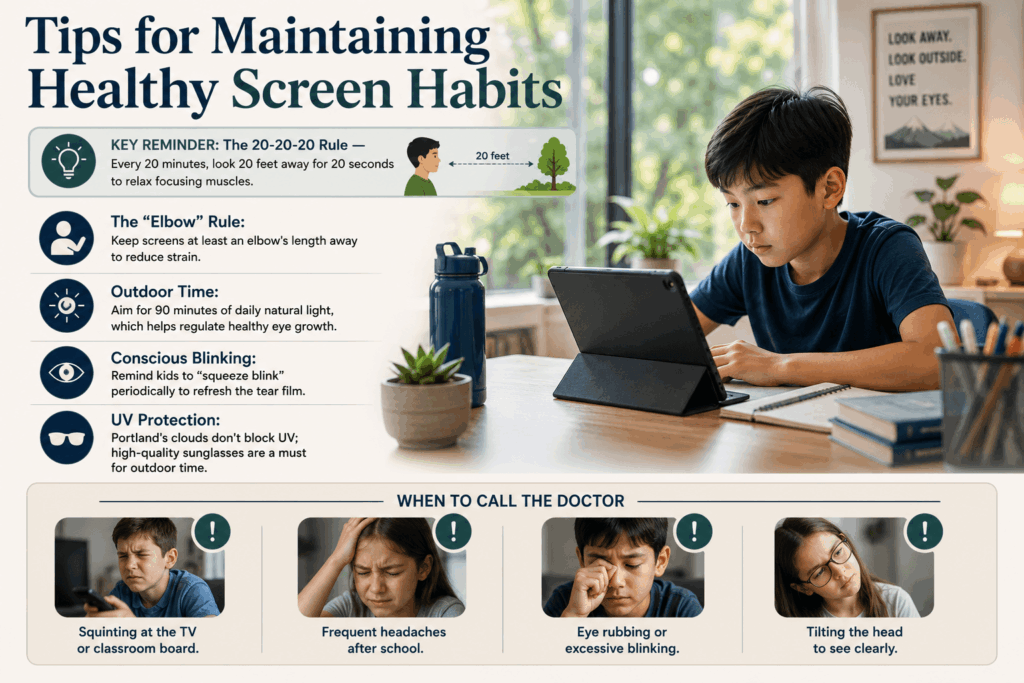
The 20-20-20 Rule – Every 20 minutes, look 20 feet away for 20 seconds to relax focusing muscles.
- The “Elbow” Rule: Keep screens at least an elbow’s length away to reduce strain.
- Outdoor Time: Aim for 90 minutes of daily natural light, which helps regulate healthy eye growth.
- Conscious Blinking: Remind kids to “squeeze blink” periodically to refresh the tear film.
- UV Protection: Portland’s clouds don’t block UV; high-quality sunglasses are a must for outdoor time.
When to Call the Doctor
- Squinting at the TV or classroom board.
- Frequent headaches after school.
- Eye rubbing or excessive blinking.
- Tilting the head to see clearly.
Conclusion: Investing in a Brighter Future
Screen time is an unavoidable part of modern life, but it doesn’t have to dictate your child’s vision health. By combining advanced eye exam technology with the expertise of the Spectacle PDX team, you can ensure your child’s eyes remain healthy, comfortable, and ready for whatever the digital world throws their way.
Expert Qoute:
“Protecting a child’s vision is a partnership between the doctor and the family. We’re here to provide the tools and the technology to make that possible.” – Spectacle PDX
Is it time for your child’s annual check-up?
Frequently Asked Questions
How does screen time affect children’s vision?
Screen time can cause digital eye strain, lead to dry eyes due to a reduced blink rate, and contribute to the development of myopia (nearsightedness). At Spectacle PDX, we monitor these changes closely using advanced imaging to ensure your child’s vision stays on track.
Can excessive screen use cause myopia in kids?
Yes, prolonged “near work” on digital devices is a significant risk factor for the development and progression of myopia in children. Spectacle PDX offers myopia management strategies to help slow this progression and protect long-term eye health.
What is digital eye strain and how does it impact developing eyes?
Digital eye strain is a group of symptoms including headaches, blurred vision, and dry eyes caused by overworking the eye muscles on screens. Because children’s eyes are still developing, this strain can be more intense and interfere with their ability to focus in the classroom.
How many hours of screen time are safe for children daily?
While there is no single “safe” number, the AOA recommends frequent breaks and limiting recreational use; Spectacle PDX provides personalized guidance based on your child’s specific eye health and risk factors.
Are tablets and smartphones worse than TVs for eye health?
Generally, yes, because smaller screens are held much closer to the face, which requires more intense focusing effort (accommodation) and increases the risk of eye strain. At Spectacle PDX, we can discuss ergonomic strategies for all your family’s devices.
How can parents help reduce screen-related eye problems?
Parents can encourage the 20-20-20 rule, ensure 90 minutes of daily outdoor time, and enforce the “elbow rule” for device distance. Spectacle PDX can further assist by providing specific lens prescriptions designed for digital comfort.
Do blue light glasses protect children’s eyes?
Blue light glasses are primarily used to reduce glare and improve visual contrast for comfort; they do not replace the need for regular breaks or professional care. Our team at Spectacle PDX can help determine if blue light filters are right for your child’s lifestyle.
Can screen time affect eye coordination or focusing ability?
Yes, excessive near work can lead to “accommodative lag” or eye teaming issues where the eyes struggle to coordinate. Spectacle PDX performs specialized testing for these functional vision issues that school screenings often miss.
What signs indicate a child’s eyes are strained from screens?
Common signs include eye rubbing, squinting, headaches, irritability during reading, and fluctuating blurred vision. If you notice these symptoms, it’s a good time to visit Spectacle PDX for a comprehensive evaluation.
Are there exercises or habits to protect young eyes from digital strain?
Habits like the “elbow rule” and conscious blinking are excellent; we also provide specific visual hygiene tips during our Portland eye exams to help your family manage digital life safely.