Introduction
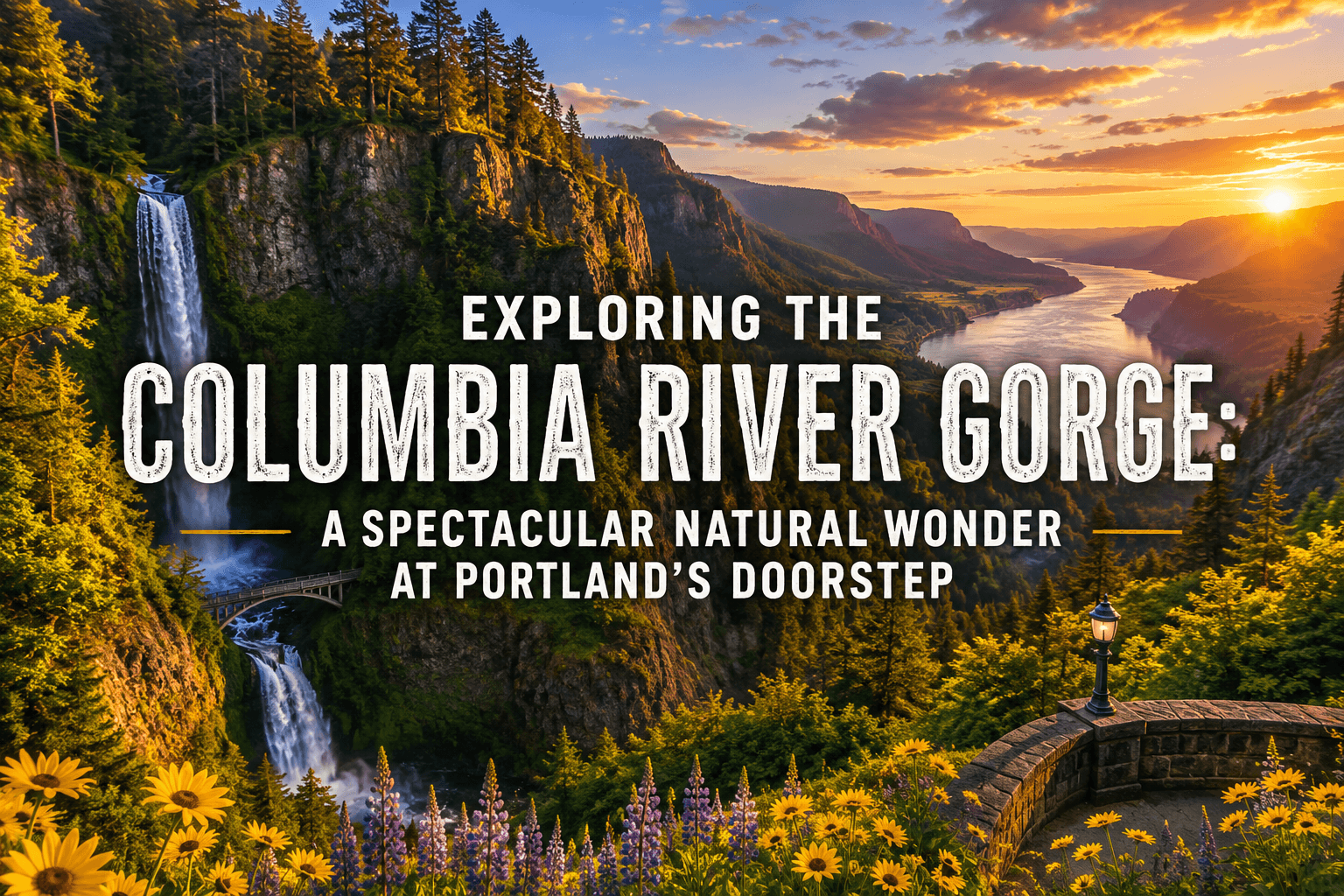
Just a short drive east of Portland lies one of the most breathtaking landscapes in the Pacific Northwest: the Columbia River Gorge. Carved by catastrophic ancient floods, this massive canyon stretches for over eighty miles, cutting through the Cascade Mountain Range and forming a dramatic natural border between Oregon and Washington.
For Portlanders and visitors alike, the Gorge serves as a magnificent backyard escape. It seamlessly transitions from lush, mossy rainforests on the western side to dry, rolling grasslands further east. Recognized as a National Scenic Area, it is a protected haven where world-famous waterfalls, sheer basalt cliffs, and the mighty Columbia River take center stage, creating a gateway to year-round outdoor recreation.
About the Area: The Gorge Environment and Community
The Columbia River Gorge is unique because it is both a wild sanctuary and a collection of thriving river communities. Towns like Corbett, Cascade Locks, and Hood River sit nestled along the water, each offering its own blend of historic charm, local artistry, and outdoor culture.
The geography of the Gorge acts as a massive natural wind tunnel. As weather systems move off the Pacific Ocean and collide with the high deserts of Eastern Oregon, powerful winds funnel through the canyon. This dynamic climate means the environment is always alive with movement, drawing athletes and nature lovers from all over the world who adapt their daily routines to the shifts in wind, cloud cover, and sunshine.
Local Attractions and Nearby Destinations
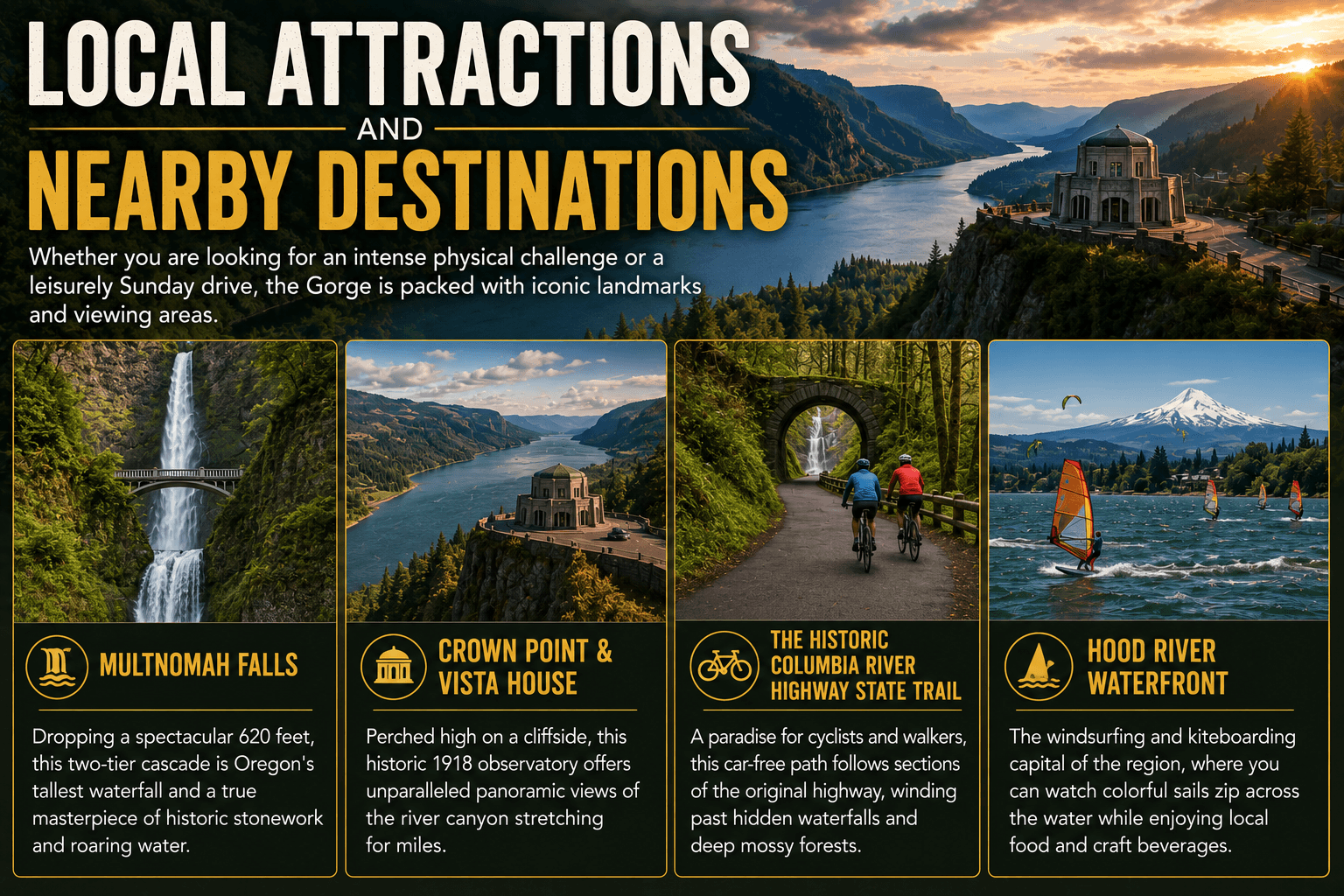
Whether you are looking for an intense physical challenge or a leisurely Sunday drive, the Gorge is packed with iconic landmarks and viewing areas.
- Multnomah Falls: Dropping a spectacular 620 feet, this two-tier cascade is Oregon’s tallest waterfall and a true masterpiece of historic stonework and roaring water.
- Crown Point & Vista House: Perched high on a cliffside, this historic 1918 observatory offers unparalleled panoramic views of the river canyon stretching for miles.
- The Historic Columbia River Highway State Trail: A paradise for cyclists and walkers, this car-free path follows sections of the original highway, winding past hidden waterfalls and deep mossy forests.
- Hood River Waterfront: The windsurfing and kiteboarding capital of the region, where you can watch colorful sails zip across the water while enjoying local food and craft beverages.
Seasonal Changes and Local Lifestyle
Life in the Gorge changes dramatically with the calendar. Spring arrives with an absolute explosion of wild balsamroot and lupine flowers painting the grassy eastern cliffs in brilliant yellows and purples. Summer brings long, sun-drenched days perfect for windsurfing on the river or hiking to hidden swimming holes.
However, the signature Gorge elements can take a toll on outdoor enthusiasts. Bright summer sunlight reflecting off the open water and exposed rocky terrain creates intense glare. Cyclists and hikers often find themselves dealing with strong, dust-carrying winds that can quickly cause dry, irritated eyes – a common frustration for contact lens wearers.
Autumn brings cooler temperatures and turns the dense maple trees into gold and amber canopies, while winter transforms the gorge into a dramatic landscape of frozen waterfalls and misty, snow-dusted cliffs.
Why People Enjoy the Area
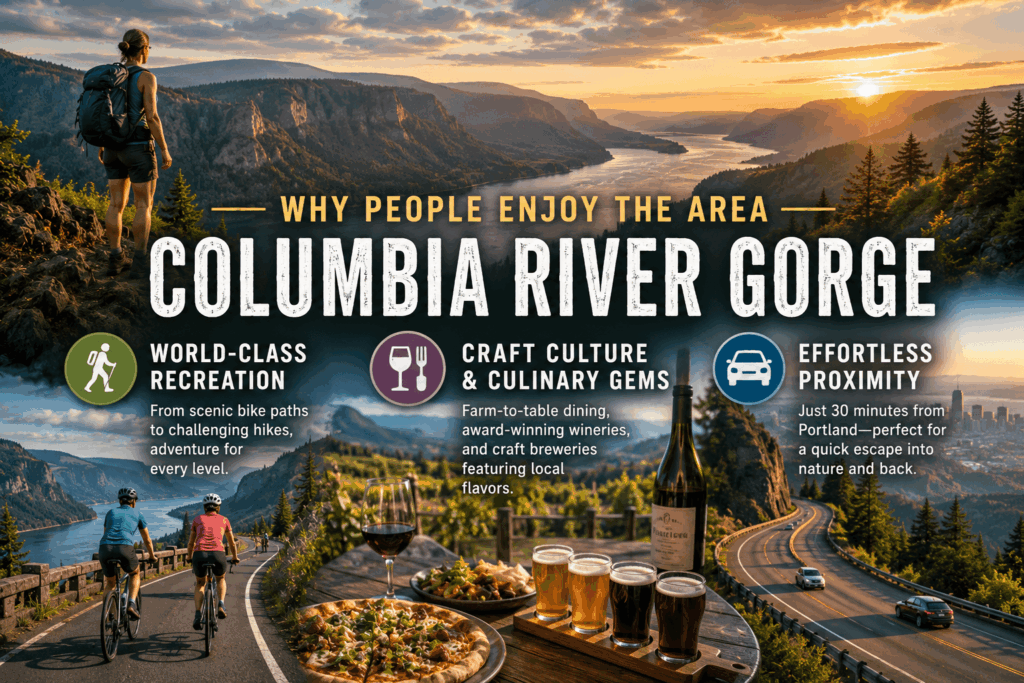
The magic of the Columbia River Gorge lies in how easily it connects people with raw, untamed nature. You can leave a downtown Portland office and, within thirty minutes, find yourself standing at the base of a roaring waterfall or high on a cliff looking across a massive river canyon.
Because the terrain is rugged and the environmental elements are powerful, having the right gear is essential for safety and enjoyment. Hikers and cyclists heavily rely on lightweight, impact-resistant eyewear that offers total UV protection and all-day comfort.
At Spectacle PDX, we love the active, adventurous spirit of our Pacific Northwest community. We help our neighbors find high-quality, durable sports eyewear and polarized sunglasses designed to cut through intense water glare and protect against wind-blown dust, ensuring you can take in every scenic vista comfortably and clearly.
Helpful Tips for Visitors or Residents
If you are planning to spend some time exploring the trails and towns of the Gorge, keep these local tips in mind:
- Bring Eye Protection: The combination of intense water reflections and strong corridor winds makes high-quality polarized lenses a lifesaver, helping prevent eye fatigue and dryness.
- Start Your Day Early: Popular waterfall trailheads along the historic highway fill up incredibly fast on summer weekends. Arriving early ensures a parking spot and a much quieter trail experience.
- Check for Permits: To preserve the natural landscape and manage crowds, certain popular areas – including the Multnomah Falls corridor – require seasonal vehicle reservations during peak summer months.
Conclusion
The Columbia River Gorge remains an irreplaceable monument to the natural beauty of the Pacific Northwest. It stands as a powerful reminder of the geological history that shaped our region and provides an endless playground for exploration, sport, and quiet reflection.
The team at Spectacle PDX is incredibly proud to serve the homeowners, adventurers, and families who call this beautiful corner of the country home. Next time you plan a journey out into the winds and waterfalls of the Gorge, stop by our shop to make sure your vision is perfectly tuned to catch every incredible detail along the way.
Frequently Asked Questions
How far is the Columbia River Gorge from Portland?
The Columbia River Gorge is exceptionally close to the Portland metropolitan area. You can reach the western gateway of the Gorge, near towns like Troutdale, in about a 30-minute drive from downtown Portland.
Do I need a permit or reservation to visit Multnomah Falls?
Yes, depending on the time of year. To manage high traffic volumes and protect the local environment, seasonal timed-use permits or reservations are frequently required during the busy summer months for the Multnomah Falls plaza area and segments of the Historic Columbia River Highway. Always check current regional guidelines before traveling.
What makes the Historic Columbia River Highway special?
Crowned as America’s first scenic highway, this historic roadway is celebrated for its remarkable masonry, winding design, and spectacular cliffside viewing platforms—such as the Vista House at Crown Point, which provides sweeping 360-degree views of the canyon below.
Why is Hood River famous for windsurfing and kiteboarding?
The unique geography of the Gorge forms a natural wind tunnel. In the summer, consistent and powerful canyon winds blow against the river current, turning the waters off Hood River into a world-class destination for kiteboarding and windsurfing athletes.
What is Beacon Rock and where is it located?
Beacon Rock is a massive ancient volcanic plug located on the Washington side of the Columbia River. It features a unique, engineered boardwalk trail that clings directly to its sheer rock face, allowing hikers to scale the monolith for incredible panoramic views from the summit.
What is the Bridge of the Gods?
The Bridge of the Gods is a historic steel cantilever bridge crossing the Columbia River at Cascade Locks. It links Oregon and Washington and serves as a vital geographic milestone for thru-hikers backpacking along the iconic Pacific Crest Trail.
What kind of scenery can I expect along the Hood River Valley "Fruit Loop"?
The Fruit Loop is a highly popular 35-mile agricultural driving route situated just south of the river. It takes visitors through a scenic patchwork of multi-generational family orchards, berry patches, vineyards, farm stands, and lavender fields.
How does the climate change from the west to the east side of the Gorge?
The Gorge features a dramatic environmental transition. The western side is a lush, temperately damp rainforest ecosystem fed by heavy coastal rains, which sustain the area’s high concentration of waterfalls. Traveling east, the canyon opens up into a much drier, sun-drenched landscape defined by pine forests and rolling grasslands.
What are some of the best hiking trails in the Gorge?
The National Scenic Area features paths for all skill levels. Options range from fully paved, accessible bike and footpaths following older sections of the historic highway to challenging, vertical backcountry climbs like the popular Angel’s Rest trail.
Can you visit the Columbia River Gorge in the winter?
Absolutely. Winter brings a quiet, atmospheric beauty to the canyon. Low mists settle over the river, and freezing spray from the cascades often creates intricate, massive ice formations along the basalt cliffs. It is a fantastic season for hiking before warming up at local craft breweries and cideries.