
Key Takeaways
- The Sun is the King of Blue Light: You receive significantly more blue light from a short walk outdoors than from a full day of screen use.
- Blink Rate is the Real Culprit: Digital eye strain is primarily caused by a 60% drop in blink rate during screen use, not permanent light damage.
- Sleep Disruption is Scientifically Proven: Blue light suppresses melatonin, making late-night device use a major hurdle for a healthy circadian rhythm.
- Advanced Diagnostics: Spectacle PDX uses Optomap technology to provide a 200° retinal view, often replacing the need for traditional dilation.
- Protective Strategies: Simple habits like the 20-20-20 rule and specialized lens coatings can dramatically improve visual comfort and contrast.
Introduction
In the tech-heavy corridors of the Silicon Forest, from downtown Portland to the bustling hubs of Beaverton, we are a community tethered to our screens. Whether it’s a marathon coding session, endless scrolling, or navigating your workday via Zoom, your eyes are working overtime. With this digital immersion comes a wave of concern regarding blue light.
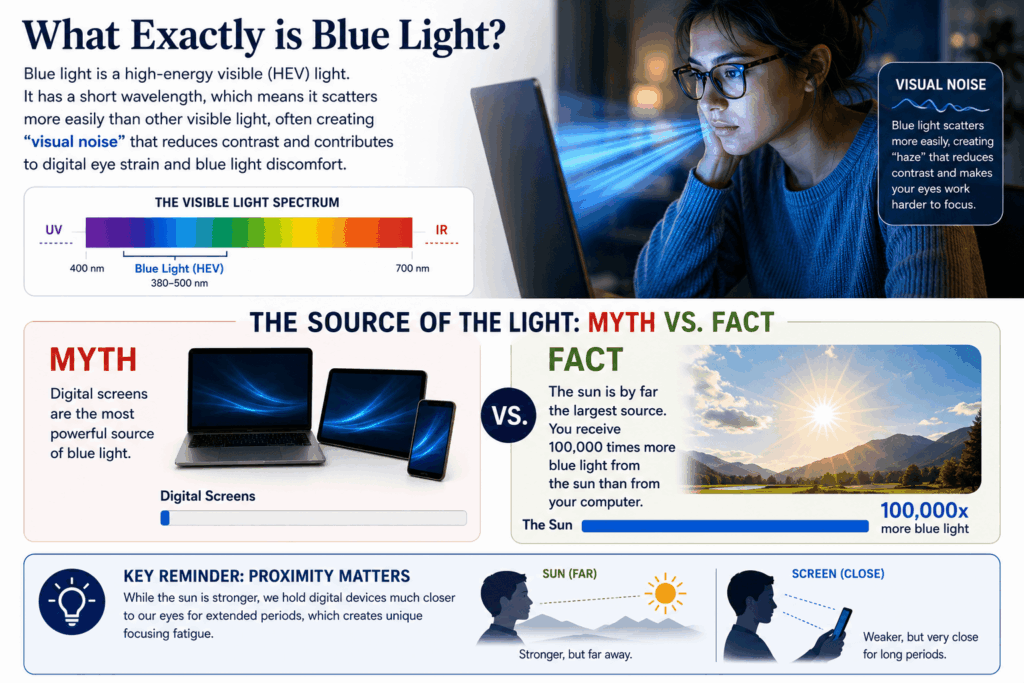
Visual Noise – Blue light scatters more easily than other visible light, creating “haze” that reduces contrast and forces your eyes to work harder to focus.
Is it a villainous force slowly damaging our retinas, or is the hype simply excellent marketing for blue light eye protection? At Spectacle PDX, we believe in grounding your eye care in clinical science while ensuring you stay comfortable in a digital world. Understanding the truth about blue light is the first step toward a comprehensive eye exam in Portland that actually addresses your modern lifestyle.
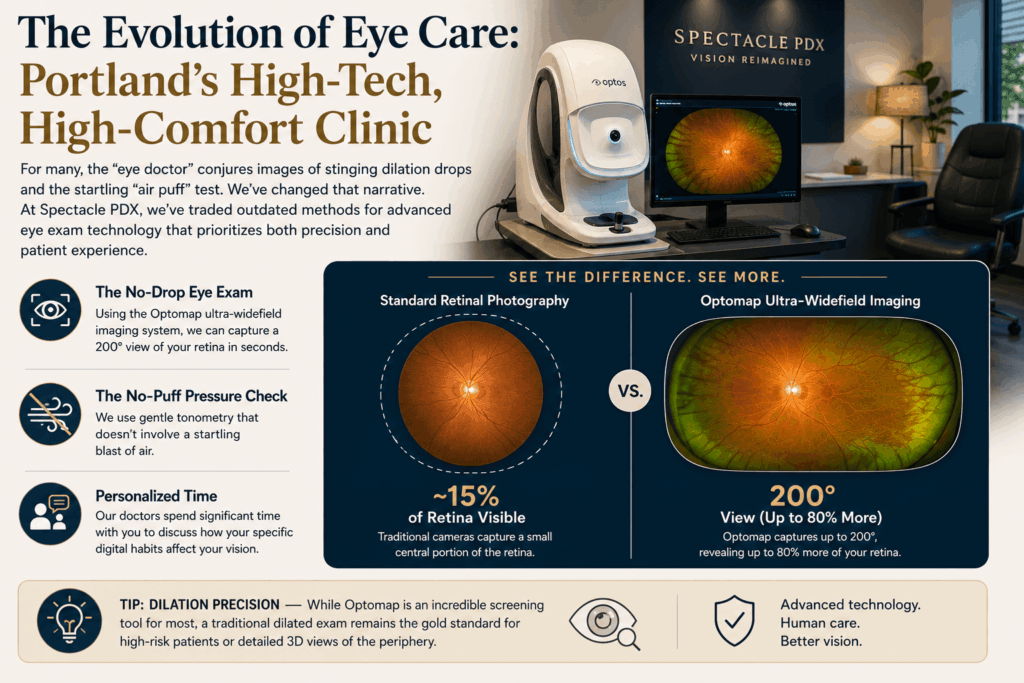
The Evolution of Eye Care: Portland’s High-Tech, High-Comfort Clinic
For many, the “eye doctor” conjures images of stinging dilation drops and the startling “air puff” test. We’ve changed that narrative. At Spectacle PDX, we’ve traded outdated methods for advanced eye exam technology that prioritizes both precision and patient experience.
- The No-Drop Eye Exam: Using the Optomap ultra-widefield imaging system, we can capture a 200° view of your retina in seconds.
- The No-Puff Pressure Check: We use gentle tonometry that doesn’t involve a startling blast of air.
- Personalized Time: Our doctors spend significant time with you to discuss how your specific digital habits affect your vision.
TIP: Dilation Precision – While Optomap is an incredible screening tool for most, a traditional dilated exam remains the gold standard for high-risk patients or detailed 3D views of the periphery.
What Exactly is Blue Light?
Blue light is a high-energy visible (HEV) light. It has a short wavelength, which means it scatters more easily than other visible light, often creating “visual noise” that reduces contrast and contributes to digital eye strain and blue light discomfort.
The Source of the Light: Myth vs. Fact
- Myth: Digital screens are the most powerful source of blue light.
- Fact: The sun is by far the largest source. You receive 100,000 times more blue light from the sun than from your computer.
Proximity Matters – While the sun is stronger, we hold digital devices much closer to our eyes for extended periods, which creates unique focusing fatigue.
The Science of Screen Time Eye Effects
Scientific research currently suggests that the blue light emitted from consumer electronics is not enough to cause physical eye diseases like macular degeneration. However, it does significantly impact two areas: Digital Eye Strain and Circadian Rhythm.
1. Digital Eye Strain in the PNW
When you stare at a screen, your blink rate drops by about 60%. This causes the tear film to evaporate, leading to dry, gritty eyes.
The Blink Gap – Normal blinking happens ~18 times per minute; on a screen, this drops to ~5 times per minute, causing mechanical dryness.
2. The Sleep Connection
Blue light suppresses melatonin, the hormone that tells your body it’s time to sleep. Using devices late at night can trick your brain into thinking it’s daytime.
Expert Quote: “While blue light isn’t ‘poison’ for your eyes, it is a massive disruptor of your sleep-wake cycle. We help you manage that exposure so your eyes-and your brain-can rest.” – The Spectacle PDX Team
Addressing Modern Concerns: Dry Eye and Myopia
Living in Beaverton or Portland means balancing a love for the outdoors with a career that likely involves a laptop. This lifestyle creates specific eye health needs:
- Dry Eye Treatment: Using Meibography, we can see if screen use is causing your oil glands to atrophy.
- Myopia Control: For our younger patients, excessive near-work on screens is a primary trigger for worsening nearsightedness.
The Eyewear Experience: Best Eyeglasses in Portland
Once we’ve handled the medical side of your exam, it’s time for the “spectacle” part of Spectacle PDX. We don’t believe in the one-size-fits-all approach found at big-box retailers.
Beyond Standard Blue Light Glasses
Contrast vs. Protection – Most ‘blue light’ benefits come from improved contrast and reduced glare, not from blocking ‘harmful’ rays.
- Premium Anti-Reflective Coatings: Reduce “visual noise” and glare from monitors.
- Office Lenses: Specialized prescriptions tailored to the exact distance of your workstation.
- Personalized Fitting: Our stylists ensure frames are perfectly aligned to reduce optical distortion.
Simple Habits for Healthy Digital Eyes
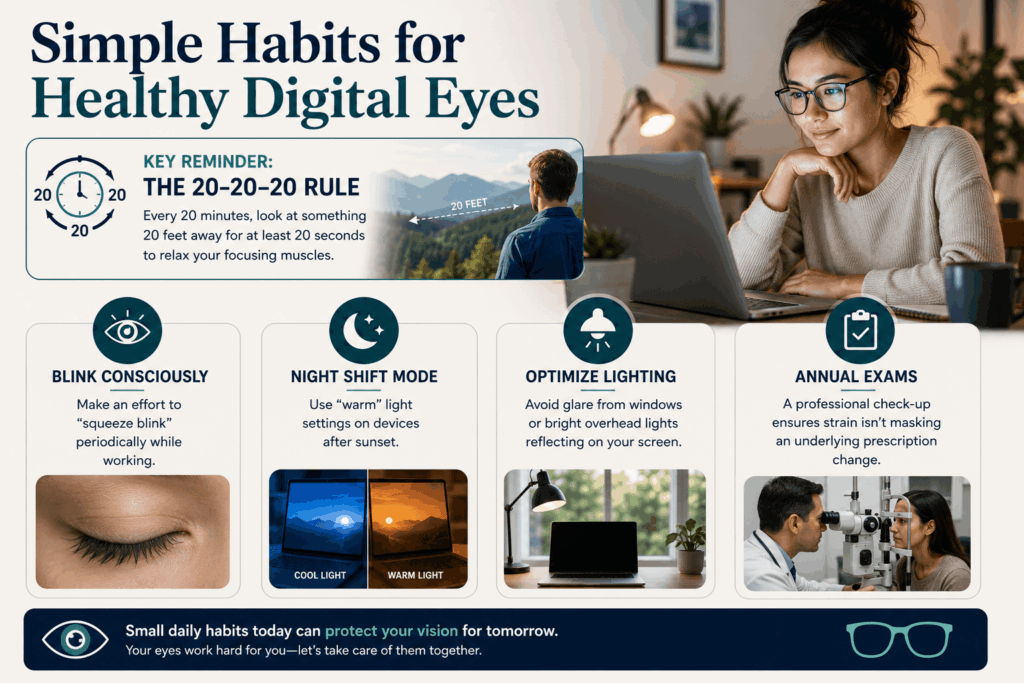
The 20-20-20 Rule – Every 20 minutes, look at something 20 feet away for at least 20 seconds to relax your focusing muscles.
- Blink Consciously: Make an effort to “squeeze blink” periodically while working.
- Night Shift Mode: Use “warm” light settings on devices after sunset.
- Optimize Lighting: Avoid glare from windows or bright overhead lights reflecting on your screen.
- Annual Exams: A professional check-up ensures strain isn’t masking an underlying prescription change.
Conclusion: Science-Based Care for a Digital World
At Spectacle PDX, we cut through the marketing myths to provide you with the facts. Blue light is a part of our modern lives, but with the right advanced eye exam technology, healthy habits, and high-quality blue light eye protection, your eyes can thrive.
Ready to see the difference for yourself? Book Your Comprehensive Eye Exam at Spectacle PDX Today!
Frequently Asked Questions
What is blue light, and where does it come from?
Blue light is a high-energy, short-wavelength light that is part of the visible light spectrum. Its primary source is the sun, but it is also emitted by digital screens (phones, tablets, computers) and LED or fluorescent lighting.
Does blue light from screens really damage your eyes?
Current scientific consensus suggests that the levels of blue light from digital devices are not high enough to cause permanent retinal damage or eye disease. However, it is a significant contributor to digital eye strain and sleep disruption, which is why Spectacle PDX monitors these effects during our exams.
Are blue light-blocking glasses effective?
Blue light glasses can be effective at reducing digital eye strain by improving contrast and cutting down on glare. At Spectacle PDX, we recommend specialized lens coatings that are tailored to your specific work environment for the best results.
How does blue light affect sleep and circadian rhythm?
Exposure to blue light in the evening suppresses the production of melatonin, the hormone responsible for sleep. This can make it harder to fall asleep and stay asleep, which is why we suggest using “night mode” on devices and visiting Spectacle PDX for lenses that help manage evening light exposure.
Can reducing screen time prevent blue light–related eye strain?
Yes, taking frequent breaks is one of the most effective ways to reduce strain. We recommend the 20-20-20 rule to our patients at Spectacle PDX to give the eye’s focusing muscles a necessary rest.
Are there natural ways to protect eyes from blue light?
The most natural protection is managing your environment by using proper lighting, maintaining a healthy distance from screens, and spending time outdoors during the day to regulate your circadian rhythm. Spectacle PDX can help you optimize your workspace ergonomics during your consultation.
Do all digital devices emit harmful levels of blue light?
While all modern digital screens emit blue light, none emit levels that are considered “harmful” in terms of causing immediate physical damage to eye tissue. The primary “harm” comes from the discomfort of prolonged use and the impact on sleep.
How much blue light exposure is considered safe daily?
There is currently no established “limit” for blue light, as we are exposed to it naturally every time we go outside. However, managing the timing of exposure—specifically reducing it before bed—is crucial for overall health, a topic we cover in-depth at Spectacle PDX.
Is blue light worse for children’s developing eyes?
Children’s eyes are more transparent, meaning more blue light reaches the back of the eye, and they are also at a higher risk for myopia related to near-work. Spectacle PDX offers specialized pediatric screenings to ensure your child’s digital habits aren’t impacting their development.
What does current scientific research say about blue light and vision health?
Research indicates that while we should not fear permanent blindness from screens, we must address the real-world symptoms of dry eye and sleep disruption. Spectacle PDX stays at the forefront of this research to provide our Portland and Beaverton patients with the most accurate, up-to-date care.