Introduction
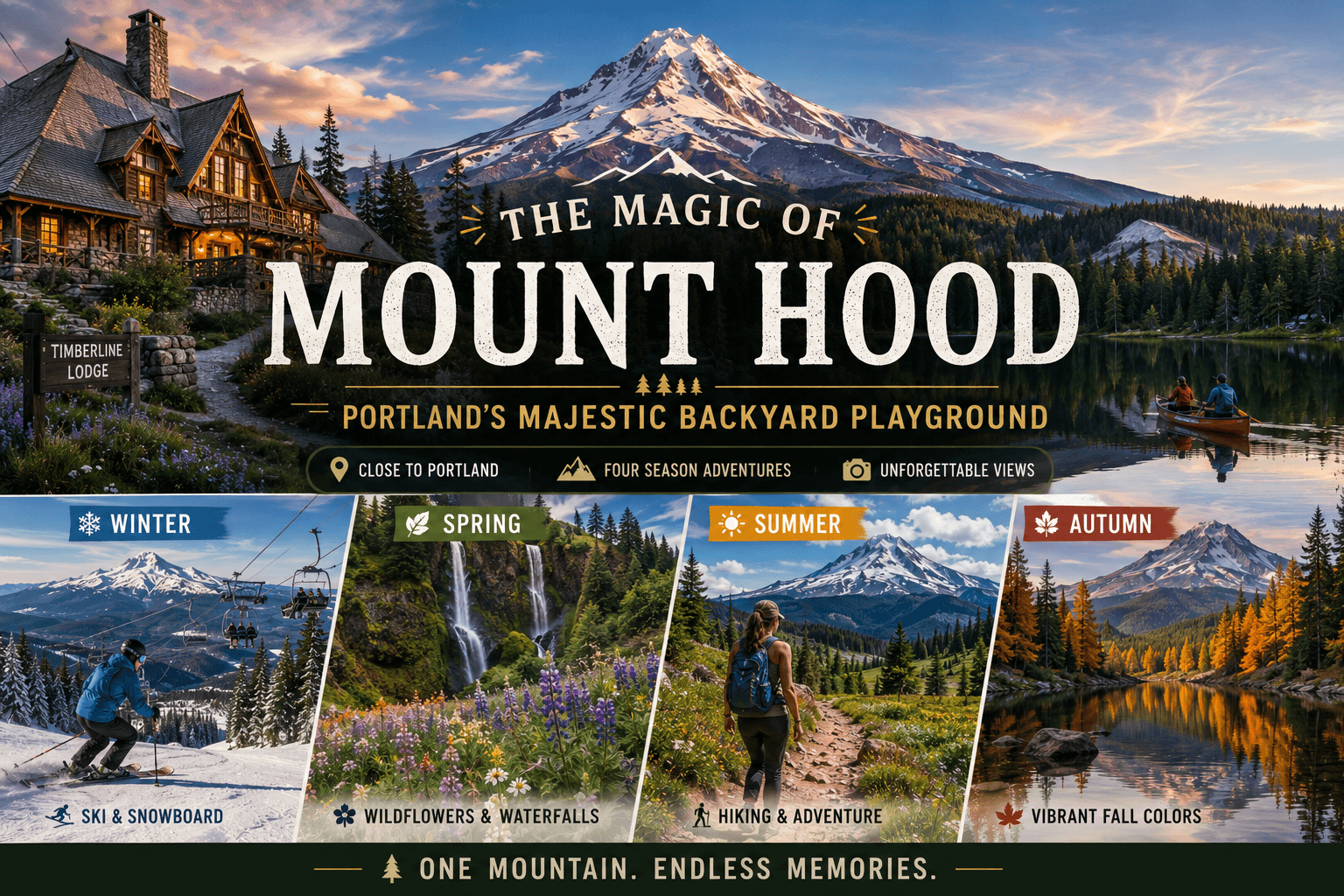
On any clear day in Portland, looking east rewards you with one of the most magnificent sights in the Pacific Northwest: the snow-capped peak of Mount Hood rising dramatically against the horizon. Standing at 11,249 feet, Oregon’s highest mountain is far more than a beautiful backdrop for the city. It is a sprawling, year-round playground for outdoor enthusiasts, families, and anyone looking to escape into nature.
Located just an hour and a half from the heart of downtown Portland, Mount Hood offers an immediate transition from urban life to alpine wilderness. Whether you are looking to carve down fresh winter powder, hike through summer wildflower meadows, or spend a quiet weekend by a mountain stream, this iconic peak delivers an unforgettable experience.
Portland’s Alpine Neighbor
Mount Hood is surrounded by the vast Mount Hood National Forest, which encompasses more than a million acres of forested mountains, lakes, and streams. The communities dotted along the mountain’s base – such as Government Camp, Welches, and Rhododendron – have a distinct, laid-back mountain culture that captures the adventurous spirit of the region.
The mountain’s climate creates a massive playground for four-season recreation. Because of its elevation and geographic position, Mount Hood catches massive amounts of winter snowfall, ensuring a long ski season that frequently stretches well into the summer months. The local lifestyle revolves around this unique environment, with residents and visitors prioritizing active, outdoor living and a deep respect for the surrounding wilderness.
Local Attractions and Nearby Destinations
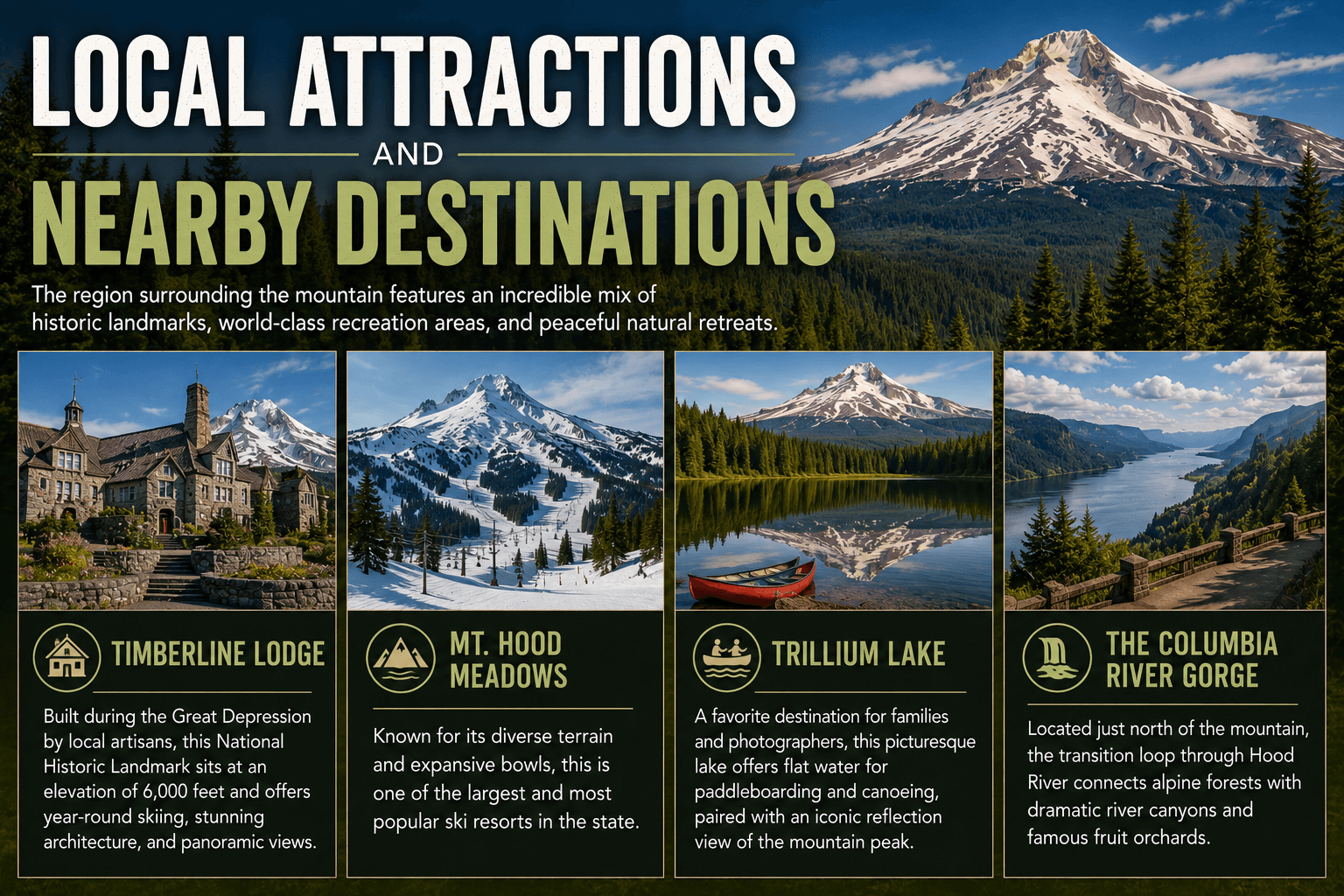
The region surrounding the mountain features an incredible mix of historic landmarks, world-class recreation areas, and peaceful natural retreats.
- Timberline Lodge: Built during the Great Depression by local artisans, this National Historic Landmark sits at an elevation of 6,000 feet and offers year-round skiing, stunning architecture, and panoramic views.
- Mt. Hood Meadows: Known for its diverse terrain and expansive bowls, this is one of the largest and most popular ski resorts in the state.
- Trillium Lake: A favorite destination for families and photographers, this picturesque lake offers flat water for paddleboarding and canoeing, paired with an iconic reflection view of the mountain peak.
- The Columbia River Gorge: Located just north of the mountain, the transition loop through Hood River connects alpine forests with dramatic river canyons and famous fruit orchards.
Seasonal Changes and Local Lifestyle
Life on the mountain changes dramatically and beautifully with the calendar. Winter turns the area into a bustling hub for skiers and snowboarders. However, the high-altitude winter wonderland comes with specific environmental conditions. Fresh snow reflects a massive amount of UV radiation, increasing the risk of glare and eye strain. Furthermore, the combination of sub-freezing winds and changing weather can quickly cause dry, irritated eyes for winter adventurers.
As the snow melts, summer opens up hundreds of miles of alpine trails for hikers, mountain bikers, and backpackers. The autumn months bring stunning fall foliage across the lower valleys and a harvest bounty to the nearby orchards, while spring offers a mix of late-season skiing and early-season valley hikes.
Why People Enjoy the Area
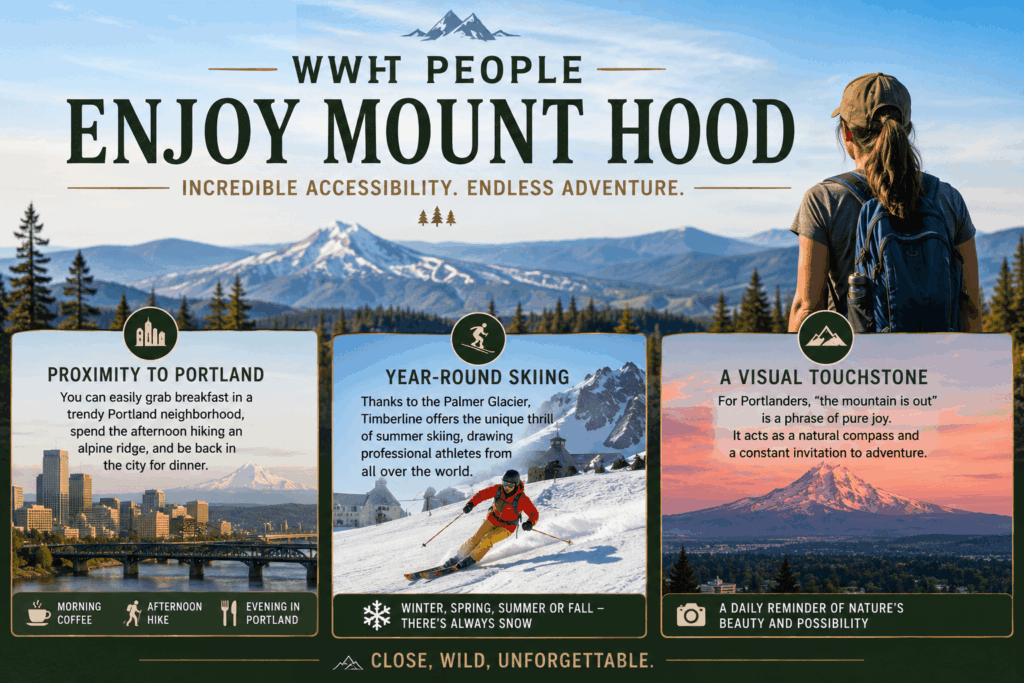
The true appeal of Mount Hood lies in its accessibility and sheer variety. It offers elite outdoor recreation opportunities without requiring a massive expedition to reach it. It is a place where families can teach their kids to ski in the morning and be back in Portland for dinner.
Because the rugged alpine environment can be demanding, outdoor adventurers often benefit from specialized gear to help them move safely. Whether you are navigating intense high-altitude snow reflection or heading out on a dusty summer mountain bike trail, having durable, impact-resistant prescription eyewear and sports sunglasses makes a massive difference in performance and comfort.
At Spectacle PDX, we love supporting the active lifestyle of our community. We help Portland residents protect their vision with high-performance UV-blocking lenses and rugged sports frames, ensuring you can take in every sweeping mountain view safely and clearly.
Helpful Tips for Visitors or Residents
If you are planning your next trip up the mountain, keep these practical tips in mind:
- Protect Your Eyes: Never underestimate the mountain sun. Always pack quality UV-blocking sunglasses or ski goggles, even on overcast winter days when the white snow still bounces harmful light into your eyes.
- Check the Passes: Winter travel requires proper preparation. Always check the real-time road conditions and carry chains or have traction tires ready when heading up to higher elevations.
- Pack Eye Drops: The alpine wind and dry mountain air can quickly sap moisture from your eyes, especially if you wear contact lenses. Keeping a bottle of lubricating drops in your pack is a lifesaver.
Conclusion
Mount Hood remains the crowning jewel of the Portland region’s natural landscape. It provides an unmatched space to reset, challenge yourself, and appreciate the immense beauty of the Pacific Northwest. From the historic halls of Timberline to the quiet shores of Trillium Lake, it is a place that leaves a lasting impression on everyone who visits.
The team at Spectacle PDX is proud to serve the vibrant, adventurous community of Portland and its surrounding outdoor playgrounds. Next time you are gearing up for a trip into the mountains, stop by to ensure your vision is ready for the adventure ahead.
Frequently Asked Questions
How far is Mount Hood from downtown Portland?
Mount Hood is highly accessible, located roughly 45 to 50 miles east-southeast of downtown Portland. Depending on traffic, mountain traffic flow, and winter weather, you can drive from the city center to the base of the mountain in about an hour and fifteen minutes.
Can you actually ski on Mount Hood during the summer?
Yes. Thanks to the permanent snowfields on the Palmer Glacier, Timberline Lodge is able to offer the unique thrill of summer skiing and snowboarding. It features the longest ski season in North America, drawing professional winter athletes and ski camps from across the globe throughout July and August.
What is the historical significance of Timberline Lodge?
Timberline Lodge is a declared National Historic Landmark situated at the 6,000-foot level of the mountain. It was built completely by hand by local artisans during the Great Depression as part of the Works Progress Administration (WPA), using native stone and timber to showcase classic Pacific Northwest “cascadian style” architecture.
What are the best activities to do at Trillium Lake?
Trillium Lake is most famous for its glassy, mirror-like surface that reflects Mount Hood perfectly. It is a prime destination for summer picnics, paddleboarding, canoeing, kayaking, and landscape photography. In the winter, the access road closes to vehicles, transforming it into a popular route for snowshoeing and cross-country skiing.
Do I need a special parking pass or permit to visit Mount Hood?
Yes. Depending on where you plan to park and the season of your visit, you will likely need either a Northwest Forest Pass for summer trailheads or a winter Sno-Park Permit for designated winter recreation lots. You can easily purchase these at local outdoor retailers or regional ranger stations on your way up.
What ski resorts are located on Mount Hood?
The mountain features multiple major snow sport areas, including Mount Hood Meadows (the largest), Timberline, and Cooper Spur on the north side. Additionally, Mt. Hood Skibowl in Government Camp is famous for being the largest night-skiing resort in the United States.
What is the Mount Hood "Fruit Loop"?
The Fruit Loop is a highly popular, scenic 35-mile driving route winding through the nearby Hood River Valley. It takes visitors through a vibrant patchwork of local fruit orchards, farm stands, cideries, berry farms, vineyards, and blooming lavender fields.
What does the phrase "the mountain is out" mean to locals?
For Portlanders, “the mountain is out” is a common phrase used on clear days when the heavy cloud cover breaks enough to reveal a crisp, full view of Mount Hood on the eastern horizon. Because the region is prone to gray overcast days, it serves as a visual touchstone and an immediate invitation to head outdoors.
Do I need to carry snow chains when driving to Mount Hood?
Yes, if you are traveling during the late fall, winter, or early spring. Mountain weather is highly unpredictable; even if it is a mild, rainy day in the Portland valley, you can easily drive straight into a heavy alpine blizzard near Government Camp. Oregon law requires drivers to carry traction devices (chains or snow-rated tires) on mountain passes during winter conditions.
What are some of the small towns located near the base of the mountain?
The base of the mountain features several tight-knit, outdoor-focused communities along Highway 26, including Sandy (the gateway to the mountain), Welches, and Government Camp. These towns serve as excellent base camps for grabbing hot meals, renting ski gear, or booking cozy cabins.