
Few landscapes capture the raw, poetic majesty of the Pacific Northwest quite like Cannon Beach and the adjacent Ecola State Park. Located roughly 80 miles northwest of Portland, this iconic stretch of the Oregon Coastline marks the spot where deep, old-growth rainforests march straight down to meet the roaring waves of the Pacific Ocean.
While it has earned international acclaim as one of the world’s most beautiful coastal destinations, Cannon Beach functions locally as a relaxed, upscale beach community. It is a place where foggy morning walks along expansive sand stretches transition into afternoons exploring independent art galleries, and where the dramatic silhouettes of coastal rock formations serve as a constant backdrop to daily life.
About the Area: Where Forested Headlands Meet the Sea
The geography of Cannon Beach is instantly recognizable, anchored by the legendary Haystack Rock. Rising 235 feet from the shoreline, this massive basalt monolith is a protected marine sanctuary and a bustling seasonal nesting ground for colorful tufted puffins. At low tide, the receding waters expose a vibrant intertidal ecosystem at its base, where locals and visitors can look into crystal-clear tide pools filled with bright green sea anemones and deep purple starfish.
Directly bordering the town’s northern edge is Ecola State Park, a 9-mile stretch of rugged headlands, hidden coves, and dense Sitka spruce forests wrapped around Tillamook Head. The park’s unique landscape is steeped in history; in 1806, Captain William Clark and a small detachment of the Lewis and Clark Expedition trekked over these exact ridges to marvel at a stranded whale, with Clark declaring it “the grandest and most pleasing prospects” his eyes had ever surveyed.
The local climate brings dynamic coastal weather shifts. Summers are crisp, breezy, and often gloriously sunny with temperatures in the high 60s to low 70s a refreshing escape from the inland valley heat. Winters bring dramatic, misty rainstorms and roaring swells that draw wave-watchers from all over the region.
Local Attractions and Coastal Lifestyle
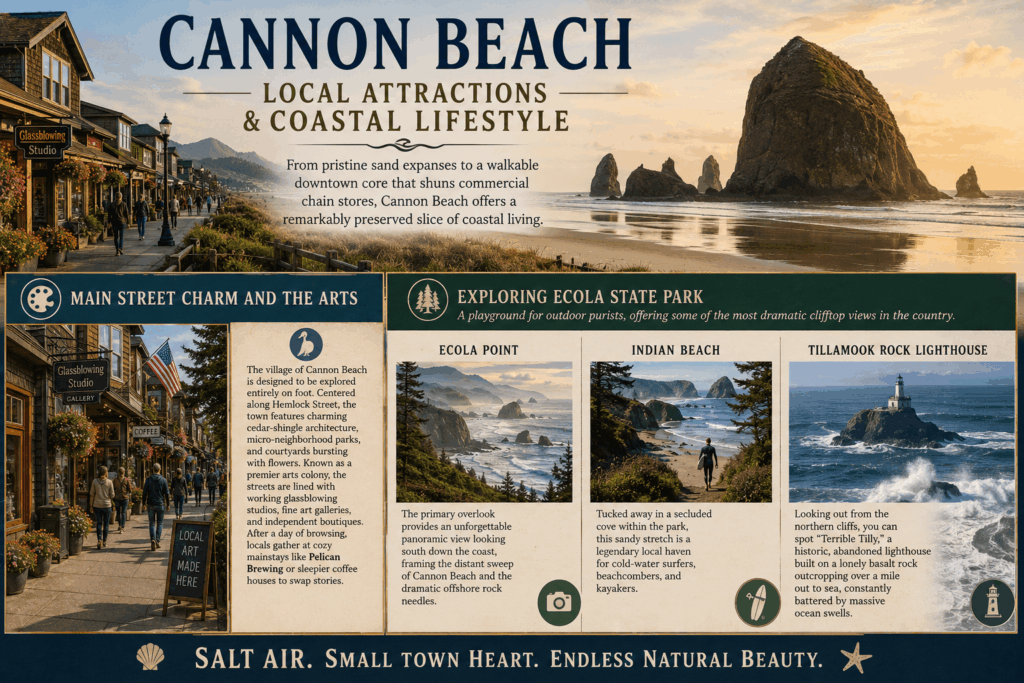
From pristine sand expanses to a walkable downtown core that shuns commercial chain stores, Cannon Beach offers a remarkably preserved slice of coastal living.
Main Street Charm and the Arts
The village of Cannon Beach is designed to be explored entirely on foot. Centered along Hemlock Street, the town features charming cedar-shingle architecture, micro-neighborhood parks, and courtyards bursting with flowers. Known as a premier arts colony, the streets are lined with working glassblowing studios, fine art galleries, and independent boutiques. After a day of browsing, locals gather at cozy mainstays like Pelican Brewing or sleepier coffee houses to swap stories.
Exploring Ecola State Park
Ecola State Park is a playground for outdoor purists, offering some of the most dramatic clifftop views in the country.
- Ecola Point: The primary overlook provides an unforgettable panoramic view looking south down the coast, framing the distant sweep of Cannon Beach and the dramatic offshore rock needles.
- Indian Beach: Tucked away in a secluded cove within the park, this sandy stretch is a legendary local haven for cold-water surfers, beachcombers, and kayakers.
- Tillamook Rock Lighthouse: Looking out from the northern cliffs, you can spot “Terrible Tilly,” a historic, abandoned lighthouse built on a lonely basalt rock outcropping over a mile out to sea, constantly battered by massive ocean swells.
Seasonal Rhythms and Community Traditions
Daily life on the coast moves to the rhythm of the tides and the changing of the seasons, creating a deeply connected community vibe.
- Spring: As the coastal mist thins, Gray whales migrate past the headlands of Ecola State Park. In April, the tufted puffins return to colonize the upper grassy slopes of Haystack Rock, bringing birdwatchers out in full force.
- Summer: This is peak beach season. The town hosts the annual Cannon Beach Sandcastle Contest, a beloved tradition since 1964 that draws elite sculptors to create massive, temporary masterpieces in the sand before the evening tide washes them away.
- Autumn: Many locals consider fall the absolute best time on the coast. The heavy summer crowds thin out, the winds calm down, and crisp, clear days offer unmatched visibility across the coastal mountain ridges.
- Winter: Winter is the season of storm-watching. Towering waves crash spectacularly against the cliffs of Ecola State Park, while low-pressure systems expose ancient “ghost forests” stumps of prehistoric trees preserved in the sand along the secluded beaches.
Helpful Tips for Visitors and Residents
- Check the Tide Tables: If you want to explore the marine gardens at the base of Haystack Rock, timing is everything. Always check a local tide chart and aim to arrive at least one hour before the absolute lowest tide of the day.
- Dress in True Layers: Coastal weather can change in a matter of minutes. Even on a warm August afternoon, the ocean breeze can drop temperatures rapidly. Carry a wind-resistant, waterproof layer everywhere you go.
- Respect the Ecosystem: Haystack Rock is a protected National Wildlife Refuge. Climbing on the rock is strictly forbidden to protect nesting seabirds and delicate marine life. Step carefully around the tide pools to keep the habitat pristine.
Conclusion
Cannon Beach and Ecola State Park beautifully embody the untamed, inspiring spirit of the Pacific Northwest coast. By pairing world-class artistic culture and cozy coastal neighborhoods with dramatic cliffside hiking trails and ancient sea stacks, the area offers a lifestyle that is both deeply peaceful and full of adventure. Whether you are watching the sun set behind the silhouette of Haystack Rock, listening to the waves crash against Indian Beach, or walking under the deep canopy of Ecola’s rainforests, this spectacular corner of Oregon leaves an indelible mark on everyone who visits.
Frequently Asked Questions
Where is Cannon Beach located, and what makes its landscape unique?
Cannon Beach is located roughly 80 miles northwest of Portland. It is a relaxed, upscale beach community famous for its raw, dramatic landscape where deep, old-growth Pacific Northwest rainforests march straight down to meet the edge of the Pacific Ocean.
What is Haystack Rock, and what can visitors see there during low tide?
Haystack Rock is a legendary 235-foot basalt monolith that serves as a protected marine sanctuary and a seasonal nesting ground for colorful tufted puffins. At low tide, the receding water exposes a vibrant intertidal ecosystem at its base, allowing visitors to view crystal-clear tide pools filled with:
-
Bright green sea anemones
-
Deep purple starfish
-
Diverse marine life
What historical event is associated with Ecola State Park?
Ecola State Park consists of a 9-mile stretch of rugged headlands and dense Sitka spruce forests wrapped around Tillamook Head. In 1806, Captain William Clark and a small detachment of the famous Lewis and Clark Expedition trekked over these exact ridges to locate a stranded whale. Clark was so moved by the view that he declared it “the grandest and most pleasing prospects” his eyes had ever surveyed.
What kind of weather can visitors expect along this stretch of the coast?
The local climate brings dynamic coastal shifts depending on the season:
-
Summers: Crisp, breezy, and frequently sunny with temperatures hovering comfortably in the high 60s to low 70s, offering an ideal escape from inland valley heat.
-
Winters: Characterized by dramatic, misty rainstorms and massive, roaring ocean swells.
What is the layout and culture of the Cannon Beach village?
The village is intentionally designed to be explored entirely on foot, with its commercial core centered along Hemlock Street. It features distinct cedar-shingle architecture, micro-neighborhood parks, and floral courtyards. Operating as a premier arts colony, the town strictly shuns corporate chain stores, filling its streets instead with working glassblowing studios, fine art galleries, independent boutiques, and cozy local coffee houses.
What are the main geographical highlights inside Ecola State Park?
Ecola State Park is a haven for outdoor enthusiasts and offers three primary landmarks:
-
Ecola Point: The park’s primary overlook providing an unforgettable panoramic view looking south down the coast, framing the distant sweep of Cannon Beach.
-
Indian Beach: A secluded cove within the park that acts as a legendary local hotspot for cold-water surfers, kayakers, and beachcombers.
-
Tillamook Rock Lighthouse: An abandoned, historic lighthouse built on a lonely basalt rock outcropping over a mile out to sea, affectionately nicknamed “Terrible Tilly.”
What wildlife events occur at Cannon Beach during the spring?
Spring marks a highly active wildlife migration window. Gray whales can be seen migrating past the high headlands of Ecola State Park, and in April, the tufted puffins return to colonize the upper grassy slopes of Haystack Rock, drawing birdwatchers from all over the country.
What is the Cannon Beach Sandcastle Contest?
Community Spotlight: Held every summer since 1964, the Cannon Beach Sandcastle Contest is a beloved local tradition that draws elite sand sculptors to the shoreline. Participants create massive, temporary masterpieces in the sand before the evening tide completely washes them away.
What are "ghost forests," and when can they be seen?
“Ghost forests” are the preserved stumps of prehistoric trees that are normally buried beneath the ocean sand. During the winter storm-watching season, powerful low-pressure systems and towering waves crash against the beaches, eroding the top layers of sand and temporarily exposing these ancient formations along secluded stretches of the coast.
What practical rules should travelers follow to ensure a safe and eco-friendly visit?
To make the most of your trip while protecting the local environment, keep these three guidelines in mind:
-
Check the Tide Tables: To safely explore the marine gardens at the base of Haystack Rock, aim to arrive at least one hour before the absolute lowest tide of the day.
-
Dress in True Layers: Coastal breezes can cause temperatures to drop rapidly, even on a sunny afternoon. Always carry a wind-resistant, waterproof outer layer.
-
Respect the Refuge: Because Haystack Rock is a protected National Wildlife Refuge, climbing on the rock is strictly forbidden to protect nesting seabirds and delicate tide-pool habitats.



0 Comments