
Key Takeaways
- Early Detection is Key: Many eye diseases like glaucoma are “silent” and show no symptoms until vision loss occurs.
- Advanced Tech Matters: Spectacle PDX uses Optomap ultra-widefield imaging to see 82% of your retina, compared to 15% in traditional exams.
- Comfort-First Care: Modern exams can often replace the “air puff” and blurry dilation drops with gentle, high-tech alternatives.
- Personalized Wellness: Eye health is linked to systemic health; specialized treatments are available for dry eye and diabetic complications.
- Curated Eyewear: Protecting your sight includes high-quality, designer frames that offer superior fit and lens technology.
Introduction
When it comes to your health, your eyes are often the most honest messengers you have. They don’t just tell you how well you can see the Rose City skyline; they offer a window into your systemic well-being. However, many of the most serious sight-threatening conditions are “silent thieves.” They creep up slowly, often showing no symptoms until permanent damage has occurred.
The “Silent” Threat – Many eye diseases progress without pain or obvious blurring. Regular screenings are the only way to detect these issues before they cause permanent damage.
Understanding the early signs of eye disease is the first step in a lifelong journey of clear vision. At Spectacle PDX, we believe that a comprehensive eye exam in Portland should be more than just “which is better, one or two?” It’s about utilizing advanced eye exam technology to catch these silent issues before they change your life.
The Evolution of Eye Care: Beyond the “Air Puff”
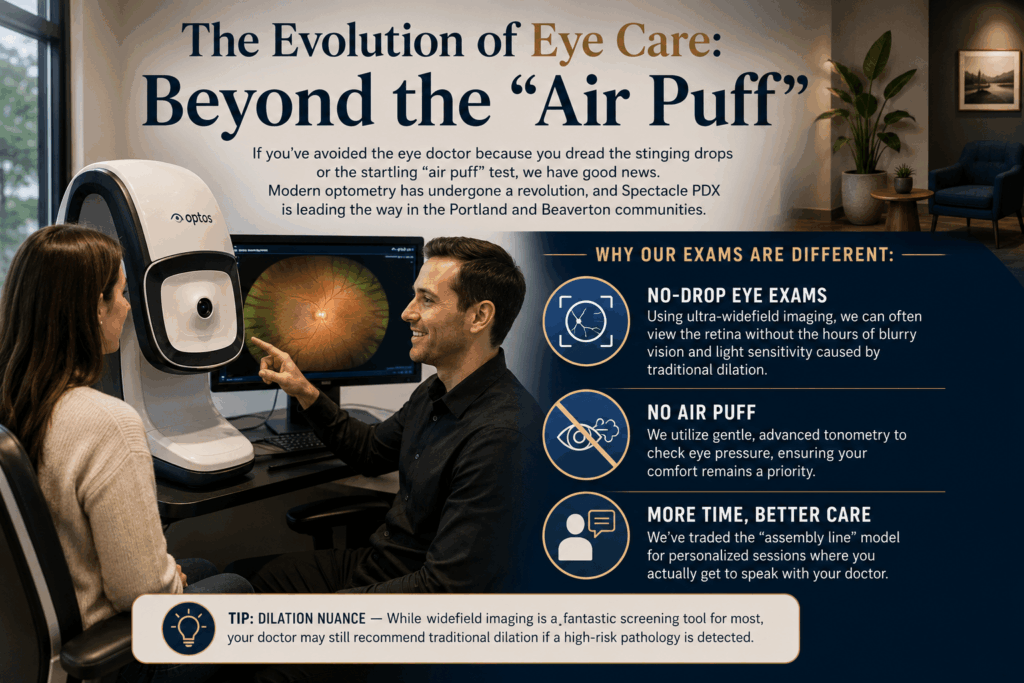
If you’ve avoided the eye doctor because you dread the stinging drops or the startling “air puff” test, we have good news. Modern optometry has undergone a revolution, and Spectacle PDX is leading the way in the Portland and Beaverton communities.
Why Our Exams are Different:
- No-Drop Eye Exams: Using ultra-widefield imaging, we can often view the retina without the hours of blurry vision and light sensitivity caused by traditional dilation.
- No Air Puff: We utilize gentle, advanced tonometry to check eye pressure, ensuring your comfort remains a priority.
- More Time, Better Care: We’ve traded the “assembly line” model for personalized sessions where you actually get to speak with your doctor.
TIP: Dilation Nuance – While widefield imaging is a fantastic screening tool for most, your doctor may still recommend traditional dilation if a high-risk pathology is detected.
What Are the Earliest Symptoms of Glaucoma?
Glaucoma is often called the “silent thief of sight” because the most common form-open-angle glaucoma-typically results in a slow, painless loss of peripheral vision. By the time a patient notices a “tunnel vision” effect, the disease is often in an advanced stage.
The Subtle Indicators
While early-stage open-angle glaucoma rarely has symptoms, you should be on the lookout for:
- Loss of peripheral vision: Subtle blurring at the very edges of your sight.
- Halos around lights: Seeing rainbow-colored rings around streetlights or lamps.
- Hazy vision: A general feeling that your “lens” is smudgey.
Expert Qoute:
“Glaucoma management is all about internal eye pressure. Because you can’t ‘feel’ high pressure, our advanced eye exam technology, like the Optomap, is vital for seeing the health of the optic nerve in high definition.” – The Spectacle PDX Team
Who Is at Risk?
- Individuals with a family history of glaucoma.
- People over the age of 60.
- Those with high blood pressure or diabetes.
Key Reminder:
Acute Glaucoma – Unlike open-angle, ‘acute angle-closure’ glaucoma is a medical emergency characterized by sudden eye pain, redness, and nausea.
Spotting Macular Degeneration and Diabetic Retinopathy
Macular Degeneration Warning Signs
Age-Related Macular Degeneration (AMD) affects your central vision-the part of the sight you use for reading and recognizing faces.
- The “Wavy Line” Test: If straight lines (like door frames or rows of text) appear wavy or distorted, this is a major red flag called metamorphopsia.
- Faded Colors: Colors may seem less vibrant or “washed out.”
- The Dark Spot: A blurry or dark spot appearing in the center of your vision.
Diabetic Retinopathy Indicators
For our neighbors in Portland and Beaverton living with diabetes, eye health is paramount. High blood sugar can damage the tiny blood vessels in the retina.
- Floaters: Seeing spots or dark strings floating in your vision.
- Fluctuating Vision: Vision that seems to change from day to day.
- Empty Areas: Dark or “blank” spots in your field of vision.
How Spectacle PDX Detects Disease Before You Feel It
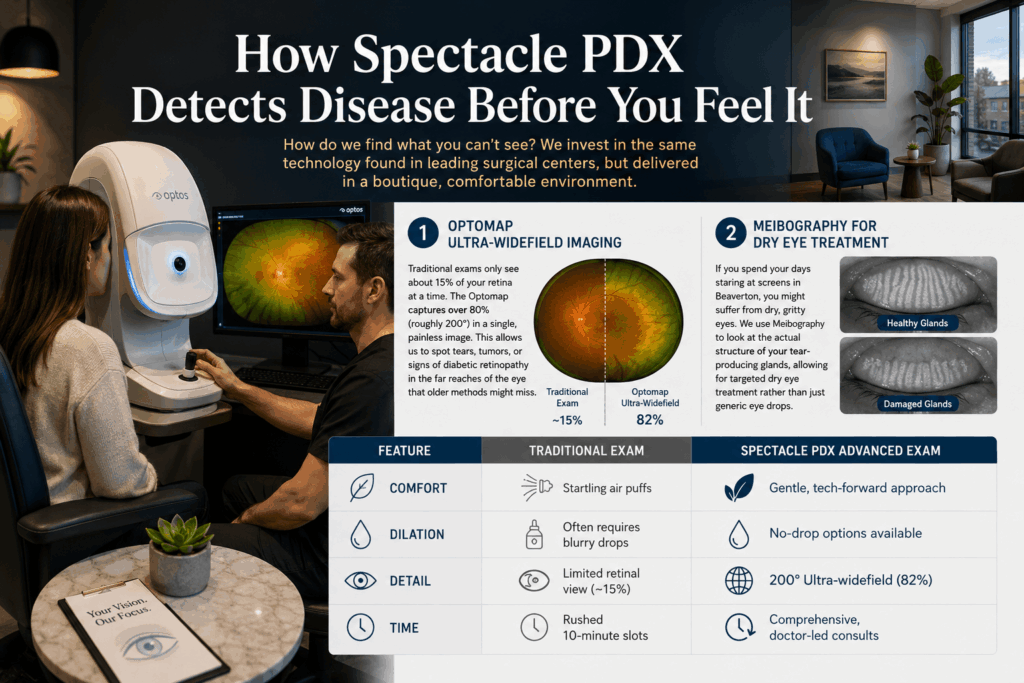
How do we find what you can’t see? We invest in the same technology found in leading surgical centers, but delivered in a boutique, comfortable environment.
1. Optomap Ultra-Widefield Imaging
Traditional exams only see about 15% of your retina at a time. The Optomap captures over 80% (roughly 200°) in a single, painless image. This allows us to spot tears, tumors, or signs of diabetic retinopathy in the far reaches of the eye that older methods might miss.
2. Meibography for Dry Eye Treatment
If you spend your days staring at screens in Beaverton, you might suffer from dry, gritty eyes. We use Meibography to look at the actual structure of your tear-producing glands, allowing for targeted dry eye treatment rather than just generic eye drops.
| Feature | Traditional Exam | Spectacle PDX Advanced Exam |
| Comfort | Startling air puffs | Gentle, tech-forward approach |
| Dilation | Often requires blurry drops | No-drop options available |
| Detail | Limited retinal view (~15%) | 200° Ultra-widefield (82%) |
| Time | Rushed 10-minute slots | Comprehensive, doctor-led consults |
The Eyewear Experience: Form Meets Function
Health is our priority, but we know that how you see the world is just as important as how the world sees you. Once we’ve ensured your eyes are healthy, our stylists help you find the best eyeglasses in Portland.
The Chain Store Difference – We bypass mass-produced, flimsy frames in favor of handcrafted, premium materials like acetate and titanium.
- Custom Lens Design: High-definition lenses tailored to your specific digital and physical lifestyle.
- Personalized Fitting: We ensure your frames sit perfectly, preventing the “nose-slide” and headaches common with poor fittings.
Practical Tips for Daily Eye Health
Protect Your Sight Daily
- The 20-20-20 Rule: Every 20 minutes, look at something 20 feet away for 20 seconds to reduce digital eye strain.
- UV Protection: Portland’s clouds don’t block UV rays. Wear high-quality sunglasses year-round.
- Nutrition: Leafy greens (Lutein/Zeaxanthin) and Omega-3s support retinal health.
- Know Your History: Ask your family about their eye health history; many conditions are hereditary.
Conclusion: A Clearer Path Forward
Your vision is your most precious sense. Don’t wait for a “shadow” in your sight or a sudden blur to take action. By choosing Spectacle PDX, you are choosing a clinic that marries clinical expertise with a warm, human touch. From our advanced eye exam technology to our hand-picked designer eyewear, we are here to ensure you see clearly for years to come.
Ready to experience a different kind of eye care? Book your comprehensive eye exam with Spectacle PDX today!
Frequently Asked Questions
What are the earliest symptoms of glaucoma?
Glaucoma is often asymptomatic in its early stages, though some patients may experience a subtle loss of peripheral vision or see halos around lights. At Spectacle PDX, we use advanced imaging to detect optic nerve changes long before you notice any vision loss.
How can I tell if I have macular degeneration?
Early signs include straight lines appearing wavy, colors looking duller, or a small blurry spot in your central vision. A comprehensive exam at Spectacle PDX can identify these changes using high-definition retinal mapping.
What are the warning signs of diabetic retinopathy?
Patients often notice “floaters,” blurred vision, or dark spots in their field of view. Because these symptoms can fluctuate, Spectacle PDX provides detailed retinal screenings to monitor blood vessel health for our diabetic patients.
Can these eye diseases be detected before vision loss occurs?
Yes, most major eye diseases can be identified in their earliest stages through the advanced technology we use at Spectacle PDX. Our “no-drop” imaging allows us to see deep into the eye to catch issues before they become permanent.
How often should I have my eyes checked for these conditions?
Most adults should have a comprehensive eye exam annually, especially if they are over 40 or have underlying health conditions. Spectacle PDX offers personalized schedules based on your specific risk factors and eye health history.
Are there lifestyle changes that can prevent these eye diseases?
Maintaining a diet rich in leafy greens, quitting smoking, and wearing UV-protective sunglasses can significantly lower your risk. During your visit to Spectacle PDX, our doctors provide tailored lifestyle advice to help you preserve your sight.
Can vision changes happen gradually without me noticing?
Absolutely; the brain is excellent at “filling in the blanks,” which can mask gradual vision loss in one eye. Regular check-ups at Spectacle PDX ensure that both eyes are functioning optimally and are healthy.
What treatments are available if these conditions are caught early?
Early treatment can range from medicated eye drops for glaucoma to specialized vitamin regimens for macular degeneration. Catching these conditions early at Spectacle PDX allows for non-invasive management that can save your sight.
Are certain people more at risk for glaucoma, macular degeneration, or diabetic retinopathy?
Risk factors include age, genetics, smoking, and chronic conditions like diabetes or high blood pressure. At Spectacle PDX, we take a deep dive into your medical history to identify and monitor your specific risk profile.
How do eye exams detect these diseases before symptoms appear?
Through tools like the Optomap and digital tonometry, we can see physical changes in the eye’s anatomy before they affect your vision. Spectacle PDX invests in this technology so we can provide a “preventative” rather than “reactive” approach to your care.