
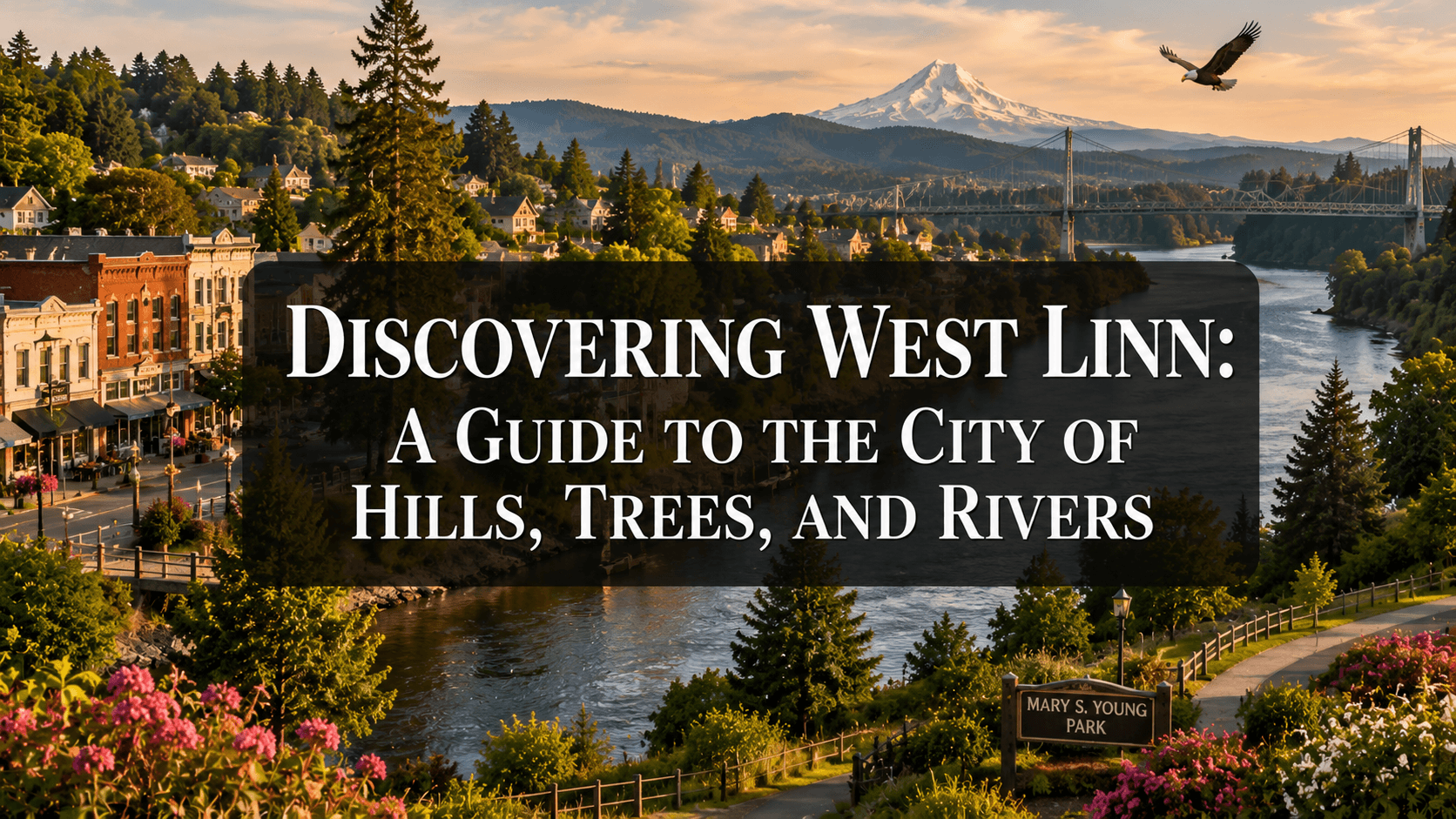
There is a distinct peacefulness that settles in as you cross the river into West Linn. Often described locally as the “city of hills, trees, and rivers,” this scenic community sits about 15 miles south of downtown Portland. Bordered by the rushing waters of the Willamette and Tualatin rivers, West Linn effortlessly balances a quiet, small-town atmosphere with convenient access to the larger Portland metropolitan area. It is the kind of place where eagle sightings over the water are just as common as neighbors catching up over morning espresso.
About the Area: A Community Carved by Nature
West Linn’s geography is defined by its dramatic topography. Steep, tree-covered hillsides roll down to meet expansive river banks, offering many neighborhoods sweeping views of the valley, Pete’s Mountain, and even Mount Hood on a clear day.
The city is a tapestry of micro-neighborhoods, each possessing its own unique character. In older areas like Bolton and Robinwood, you will find cozy mid-century homes and vintage bungalows nestled along mature, canopy-lined streets. Head up the hills to neighborhoods like Barrington Heights, Hidden Springs, or Rosemont Summit, and the landscape transitions to spacious modern homes with manicured lawns and immediate access to neighborhood trail systems.
The local climate mirrors the classic Pacific Northwest pattern: warm, glorious summers that stay relatively dry, followed by soft, misty winters that keep the surrounding forests incredibly lush and vibrant throughout the year.
Local Attractions and Nearby Destinations
For a city of its size, West Linn packs an impressive punch when it comes to outdoor recreation and localized culture.
Main Street Charm
The heart of the community’s social life beats in the Historic Willamette District. This walkable stretch of Willamette Falls Drive feels like a step back in time. It is lined with locally owned restaurants, cozy cafes like the Willamette Coffee House, and independent boutiques. It functions as a central gathering place where residents meet for dinner or run their daily errands.
Parks and Natural Preserves
With over 600 acres of parkland, nature is never more than a few minutes away.
- Mary S. Young Park: A local favorite for hikers, birdwatchers, and dog owners. This expansive forested park features miles of quiet walking trails that weave through deep woods and lead directly to secluded beaches along the Willamette River.
- Camassia Natural Area: Maintained by the Nature Conservancy, this unique 26-acre rocky plateau is famous for its mid-spring bloom of common camas lilies, which blanket the basalt rock formations in a sea of vibrant purple-blue.
- Fields Bridge Park: Located along the Tualatin River, this park features active community gardens, sports fields, and paved walking paths winding past historic homestead remnants.
Seasonal Changes and Local Lifestyle
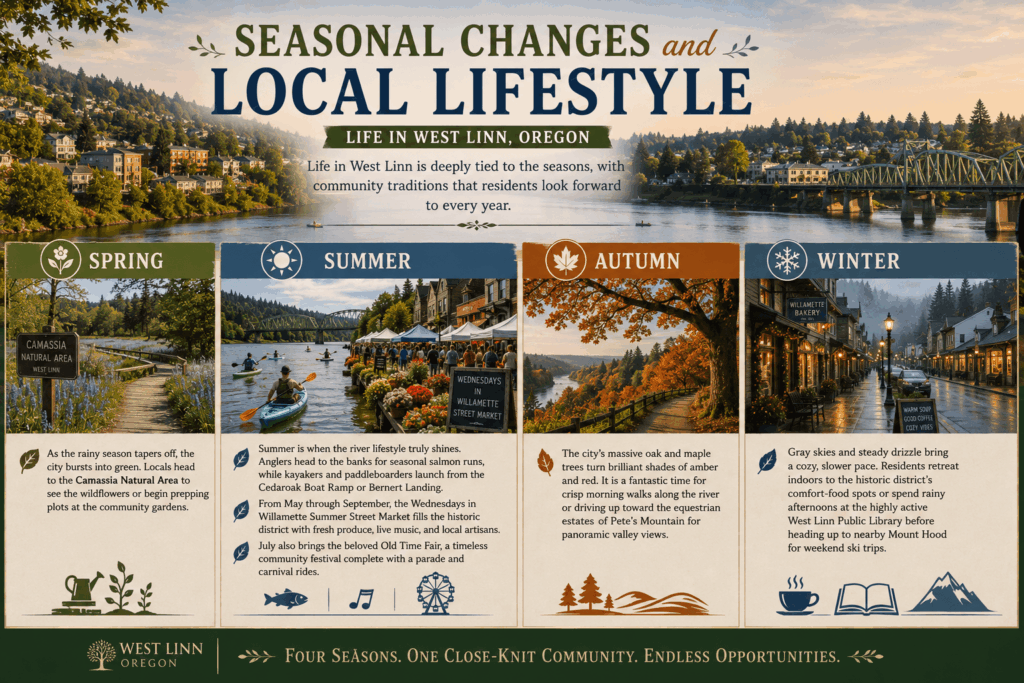
Life in West Linn is deeply tied to the seasons, with community traditions that residents look forward to every year.
- Spring: As the rainy season tapers off, the city bursts into green. Locals head to the Camassia Natural Area to see the wildflowers or begin prepping plots at the community gardens.
- Summer: Summer is when the river lifestyle truly shines. Anglers head to the banks for seasonal salmon runs, while kayakers and paddleboarders launch from the Cedaroak Boat Ramp or Bernert Landing. From May through September, the Wednesdays in Willamette Summer Street Market fills the historic district with fresh produce, live music, and local artisans. July also brings the beloved Old Time Fair, a timeless community festival complete with a parade and carnival rides.
- Autumn: The city’s massive oak and maple trees turn brilliant shades of amber and red. It is a fantastic time for crisp morning walks along the river or driving up toward the equestrian estates of Pete’s Mountain for panoramic valley views.
- Winter: Gray skies and steady drizzle bring a cozy, slower pace. Residents retreat indoors to the historic district’s comfort-food spots or spend rainy afternoons at the highly active West Linn Public Library before heading up to nearby Mount Hood for weekend ski trips.
Why People Enjoy the Area
Those who choose West Linn often point to the high quality of life and the intentional preservation of its natural footprint. The public schools are consistently ranked among the best in Oregon, drawing many families to the area.
Because the town is built into the hillsides, it lacks dense commercial strip malls, opting instead for localized hubs like the West Linn Central Village for daily necessities. This design prevents heavy cut-through traffic, keeping residential streets quiet and safe. Additionally, while the neighborhood feels remarkably secluded, a quick jump onto Interstate 205 connects residents to downtown Portland or the Portland International Airport in less than 30 minutes.
Helpful Tips for Visitors and Residents
- Prepare for the Elevation: If you plan on cycling or walking through the city, be ready for some serious steep inclines. The hills give the town its beautiful views, but they make for a challenging workout!
- Respect the Wildlife: Because of the dense tree canopy and proximity to two major rivers, you will share the area with deer, osprey, bald eagles, and blue herons. Drive carefully on winding roads like Stafford Road and Rosemont Road, especially at dawn and dusk.
- Support Local on Wednesdays: If you are visiting during the warmer months, plan your trip around the Wednesday evening street market in Willamette to experience the absolute best of the local community vibe.
Conclusion
West Linn stands out as a unique sanctuary within the Portland metro region. By pairing rugged riverfront beauty and dense forest trails with a historic main street and a tight-knit community feel, it offers a lifestyle that is both relaxed and deeply rewarding. Whether you are searching for a quiet riverside hike, a vibrant summer market, or a peaceful place to plant roots, West Linn welcomes you with open arms and timeless Pacific Northwest charm.
Frequently Asked Questions
Where is West Linn located, and what is its descriptive local nickname?
West Linn is a scenic, peaceful community located about 15 miles south of downtown Portland. It is bordered cleanly by the rushing waters of the Willamette and Tualatin rivers. Locally, it is widely celebrated by its descriptive nickname: the “city of hills, trees, and rivers.”
How do West Linn’s micro-neighborhoods differ in character and housing styles?
The city features a diverse topography that naturally divides its residential landscape:
-
Older Lowland Areas (Bolton and Robinwood): Characterized by mature, canopy-lined streets featuring cozy mid-century homes and vintage bungalows.
-
Hillside Communities (Barrington Heights, Hidden Springs, and Rosemont Summit): Characterized by sprawling, spacious modern homes boasting manicured lawns and direct, immediate access to local neighborhood trail networks.
What is the Historic Willamette District, and what does it offer?
Serving as the absolute heartbeat of the community’s social life, the Historic Willamette District is a highly walkable stretch of road located along Willamette Falls Drive. It offers a nostalgic, step-back-in-time environment packed with independent boutiques, locally owned restaurants, and cozy neighborhood gathering spots like the Willamette Coffee House.
What recreational highlights can nature lovers experience at Mary S. Young Park?
As a premier standout within the city’s 600-acre park system, Mary S. Young Park is an expansive, densely forested sanctuary. It is a favored regional destination for hikers, birdwatchers, and dog owners, featuring miles of quiet walking paths that wind deeply through the woods and open up directly onto secluded beaches along the Willamette River.
What is the Camassia Natural Area, and when is the best time to visit?
Maintained directly by the Nature Conservancy, the Camassia Natural Area is a unique 26-acre rocky plateau built on ancient basalt rock formations. The absolute best time to visit is during mid-spring, when the entire plateau erupts into a spectacular bloom of common camas lilies, blanketing the fields in a vibrant sea of purple-blue.
What water-based activities define the local summer lifestyle?
When the summer months arrive, life shifts completely toward the water. Anglers flock to the riverbanks for seasonal salmon runs, while kayakers, canoers, and paddleboarders seamlessly launch their watercraft into the currents from Bernert Landing or the Cedaroak Boat Ramp.
What are the two major community events held in West Linn during the summer?
-
Wednesdays in Willamette Summer Street Market: Running every Wednesday evening from May through September, this lively market fills the historic district with local artisans, fresh produce, and live music.
-
The Old Time Fair: Hosted every July, this timeless community festival brings generations of residents together for a traditional parade and classic carnival rides.
Why is West Linn considered an exceptionally stable and attractive market for growing families?
Families consistently target West Linn because its public schools are routinely ranked among the absolute best in the state of Oregon. Additionally, the city offers an incredibly high quality of life, beautifully combining an intentional preservation of its natural footprint with incredibly safe, quiet residential streets.
How does the city’s physical layout prevent heavy cut-through traffic?
Because the municipality is built directly into steep hillsides, it lacks traditional, high-density commercial strip malls. The town relies instead on quiet, localized hubs like the West Linn Central Village for daily necessities. This intentional geographic design safely keeps commercial congestion off neighborhood roads while keeping a quick commute to downtown Portland or the airport under 30 minutes via Interstate 205.
What vital safety and fitness tips should visitors keep in mind?
To enjoy West Linn like a local, keep these practical rules of thumb in mind:
-
Prepare for Intense Inclines: The rolling hills provide breathtaking views of Mount Hood, but they feature serious, steep elevations. If you plan on cycling or running through the city, prepare for a highly challenging workout.
-
Watch for Wandering Wildlife: Due to the dense forest canopy and major river corridors, you will routinely share space with deer, osprey, bald eagles, and blue herons. Drive with extra caution on winding routes like Stafford Road and Rosemont Road, particularly during peak animal movement hours at dawn and dusk.
0 Comments