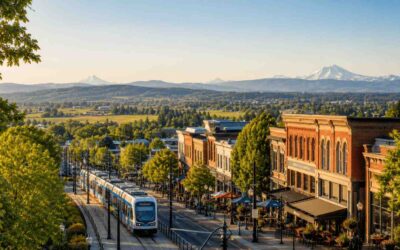
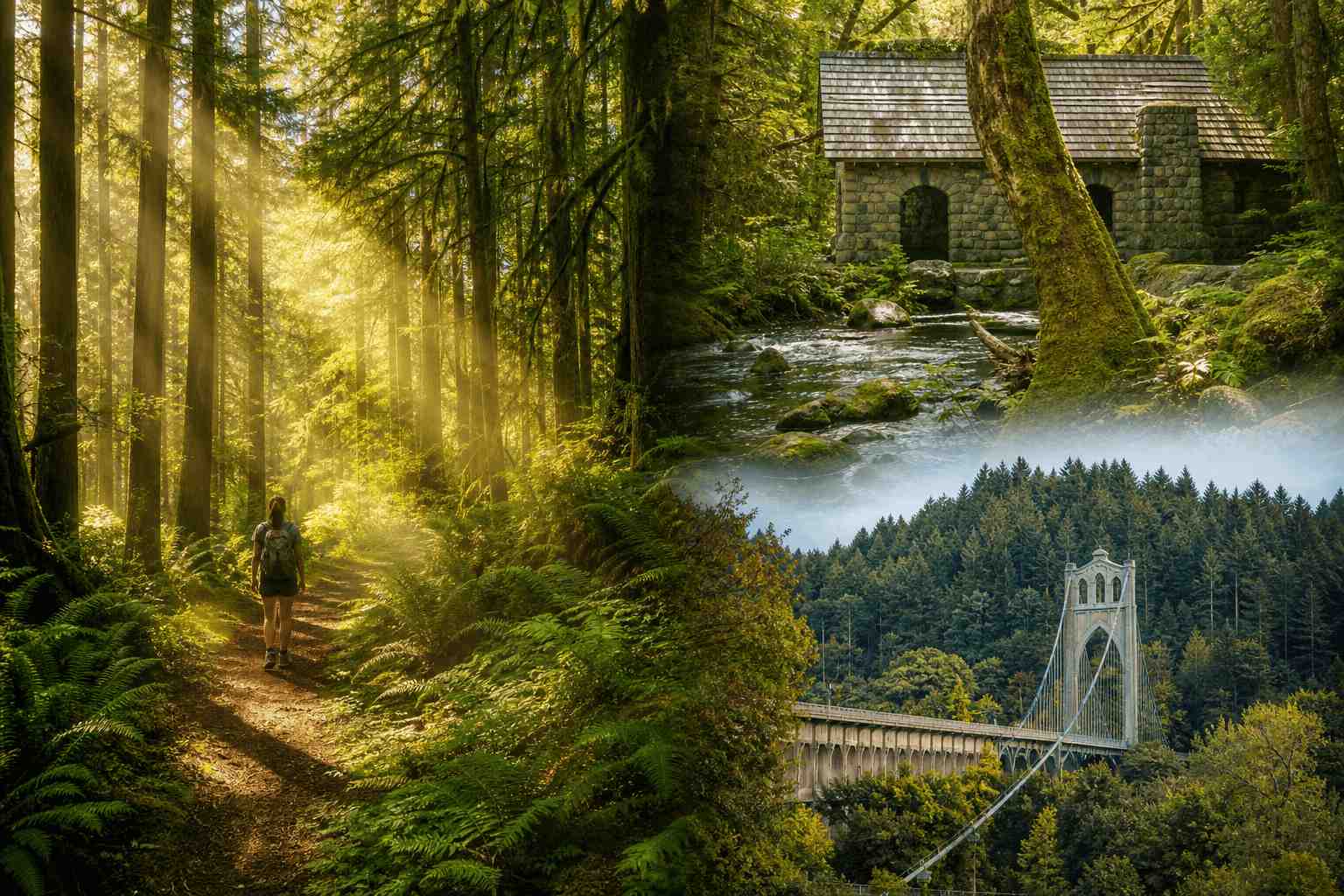
Stretching over eight miles along the eastern slope of the Tualatin Mountains, Forest Park is one of the largest urban forest reserves in the United States. Covering more than 5,200 acres of dense, canopy-covered woods, this massive natural sanctuary sits right in Portland’s backyard, offering a peaceful escape from the energy of the city.
Whether you are an avid trail runner tackling miles of dirt paths, a bird watcher scanning the tall fir trees, or someone who simply enjoys a quiet weekend walk under towering Douglas firs, Forest Park provides an extraordinary connection to the natural beauty of the Pacific Northwest.
History, Environment, and Community
Forest Park was officially dedicated in 1948, but its history stretches back much further. Long before Portland was established, the area was cared for by Indigenous peoples, including the Multnomah and Clackamas tribes. In the early 20th century, forward-thinking civic leaders recognized the importance of protecting the wooded hillsides above the Willamette River from urban development, leading to the creation of the public park we enjoy today.
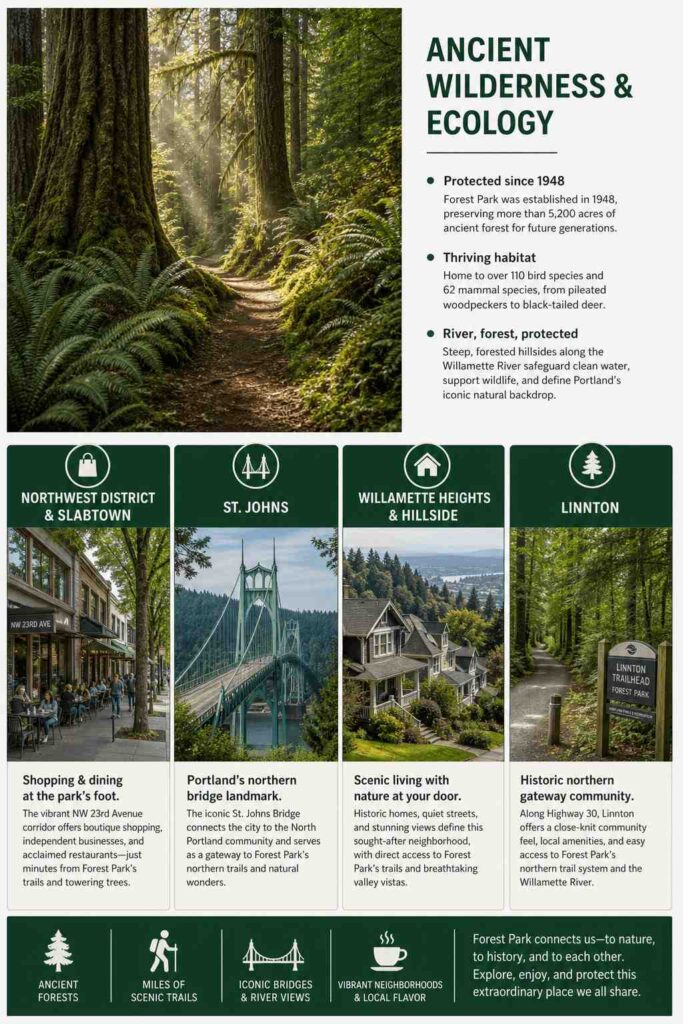
The environment inside Forest Park feels like an ancient wilderness. Massive evergreen trees, moss-draped bigleaf maples, sword ferns, and trickling streams create an immersive woodland setting. It serves as a vital habitat for more than 110 bird species and 62 mammal species, making it a critical ecological corridor for the region.
Forest Park links seamlessly into several distinct local neighborhoods and popular areas:
- Northwest District & Slabtown: Located at the southern foot of the park, these bustling historic neighborhoods offer boutique shopping, coffee shops, and popular dining spots along NW 23rd Avenue.
- St. Johns: Situated across the Willamette River at the northern tip of the park, connected by the iconic, gothic-arched St. Johns Bridge.
- Willamette Heights & Hillside: Quiet residential neighborhoods tucked directly along the park’s edge, featuring scenic overlooks and direct trail access.
- Linnton: A historic community bordering the park along Highway 30, providing gateway access to quieter northern trailheads.
Things to See and Do Nearby
With more than 80 miles of interconnected trails and dirt roads, Forest Park offers endless opportunities for outdoor recreation and sightseeing.
Iconic Trails and Highlights
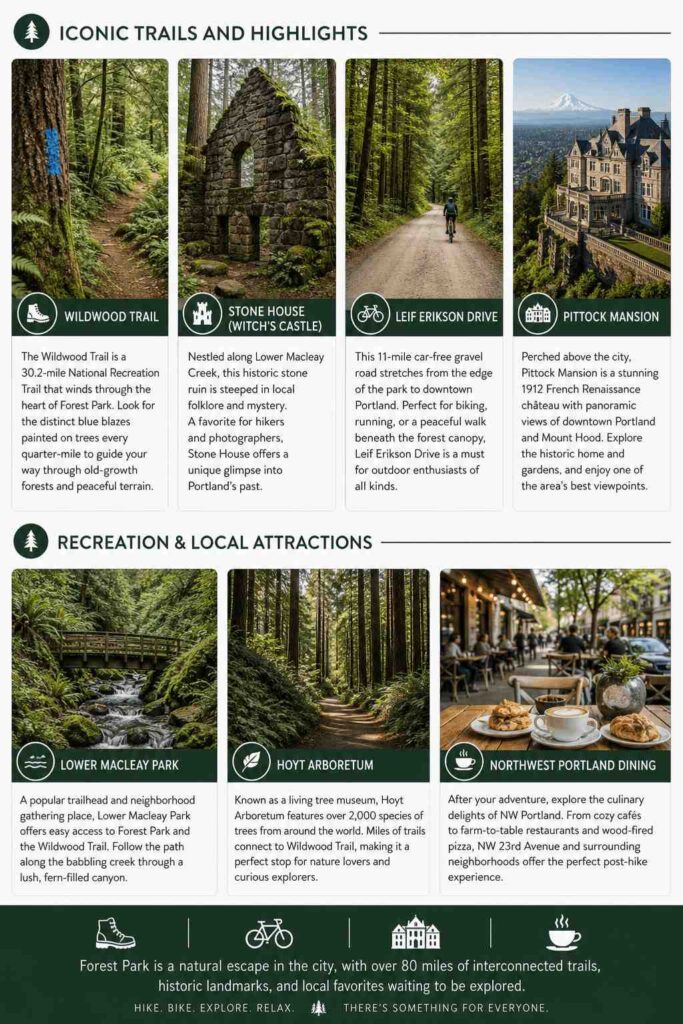
- Wildwood Trail: The crown jewel of the park’s trail system. This National Recreation Trail spans 30.2 miles from end to end, marked with blue painted blazes on the trees every quarter-mile.
- The Stone House (Witch’s Castle): A famous stone structure located near the Lower Macleay Trailhead, rich with local urban folklore and photo opportunities.
- Leif Erikson Drive: A wide, dirt road winding through the park for 11 miles, closed to motor vehicles and ideal for gravel biking, running, and casual walks.
- Pittock Mansion: Sitting just south of the park boundaries, this historic 1912 French Renaissance château offers panoramic views of downtown Portland and Mount Hood.
Outdoor Recreation & Attractions
- Lower Macleay Park: A popular entrance point featuring a babbling creek, lush fern canyons, and easy access to the heart of the trail network.
- Hoyt Arboretum: Located nearby in Washington Park, connecting directly to the southern end of the Wildwood Trail.
- Dining in Northwest Portland: After a long hike, head down to NW 21st or 23rd Avenues for wood-fired pizza, fresh bakeries, or locally roasted coffee.
Seasonal Changes and Local Lifestyle
Forest Park changes dramatic tones with each passing season, shaping how locals experience the outdoors:
- Spring: Delicate spring blossoms emerge alongside vibrant green moss and fresh fern fronds. The creeks run full, making it a wonderful time for quiet morning walks.
- Summer: Dense forest canopies provide natural shade and cooler temperatures during warm summer days. Bright sunlight filtering through the trees can cause glare, making high-quality UV protection and polarized sunglasses helpful on the trails.
- Fall: Golden maple leaves carpet the dirt paths, transforming the green canopy into shades of yellow, orange, and bronze during late October.
- Winter: Misty rain creates a cozy, moody forest setting. While rain jackets and waterproof boots are required, the dense tree cover shelters hikers from heavy downpours.
Why People Love This Area
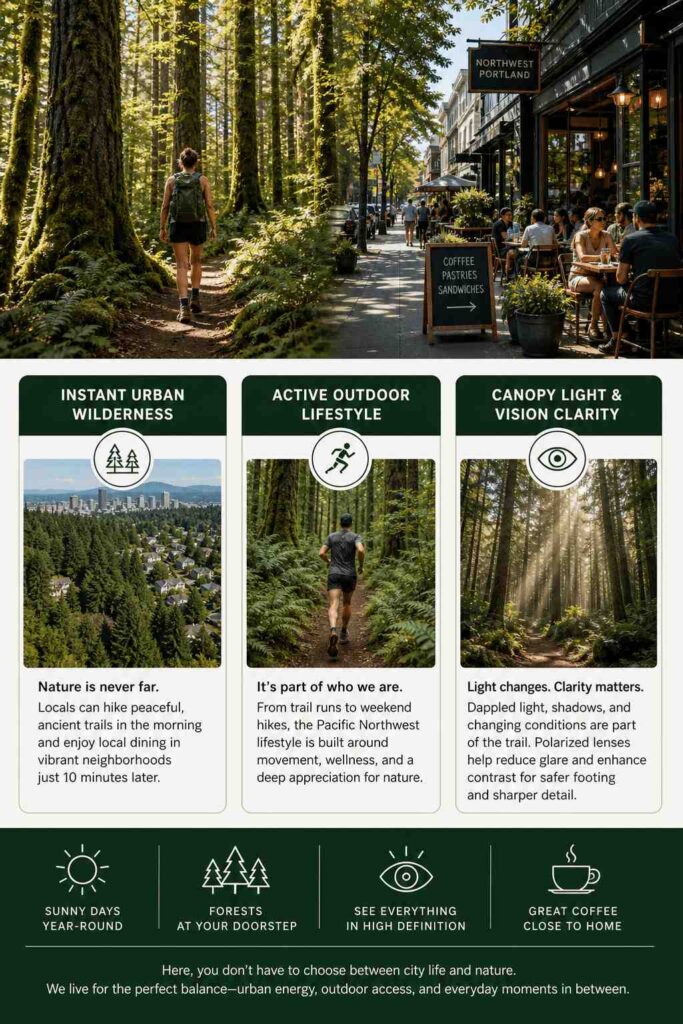
Locals love Forest Park because it provides instant access to wilderness without having to leave the city. You can start your morning hiking through peaceful old-growth forest and be enjoying lunch at a local cafe just ten minutes later.
At Spectacle PDX, we share that same deep appreciation for our local surroundings and active lifestyle. Located nearby in Northwest Portland and Beaverton, our independent optical practice helps hikers, runners, and nature lovers see every detail of the Pacific Northwest with absolute clarity.
Whether you need custom polarized lenses to block harsh light filtering through the tree canopy or an advanced, comfortable eye exam that skips uncomfortable air puffs and dilation drops, Spectacle PDX is dedicated to supporting your vision and lifestyle.
Helpful Tips for Visitors and Residents
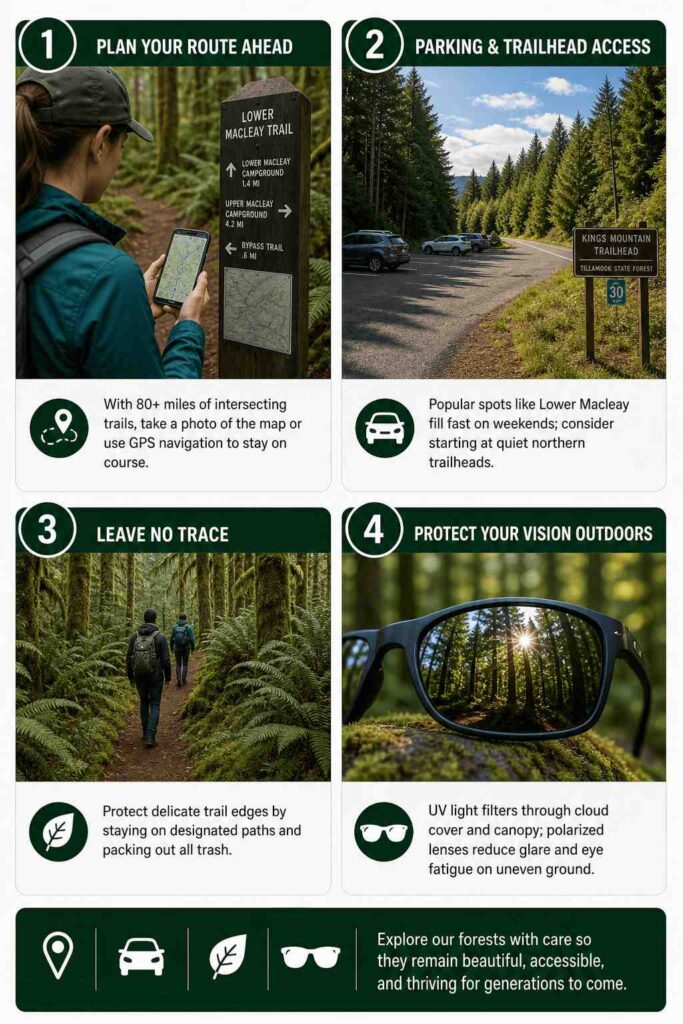
- Plan Your Route Ahead of Time: With dozens of intersecting paths, carrying a digital map or taking a photo of the trailhead map helps keep you on course.
- Mind the Parking Limits: Popular entry points like Lower Macleay and the Pittock Mansion lots fill up quickly on sunny weekends. Consider starting at lesser-known trailheads along Highway 30 or NW Skyline Boulevard.
- Leave No Trace: Stay on designated paths to protect delicate trail edges and pack out all trash to keep the forest pristine for wildlife and future visitors.
- Protect Your Vision Outdoors: Even on overcast Northwest days, UV light filters through the cloud cover and tree canopy. Polarized lenses help reduce eye fatigue while keeping your vision sharp along uneven terrain.
Conclusion
Forest Park stands as a defining symbol of Portland’s commitment to nature, outdoor recreation, and community well-being. Whether you are tackling a long-distance run on the Wildwood Trail or taking a quick weekend stroll beneath the evergreen canopy, this urban forest offers a refreshing escape like no other.
Spectacle PDX is proud to serve the neighbors, families, and outdoor enthusiasts who make this region so special. We believe clear, comfortable vision lets you enjoy every detail of our local scenery to the fullest. If you are due for a comprehensive eye exam or want to explore our curated selection of independent eyewear and custom sunwear, we invite you to reach out to our team or schedule an appointment online today.
Frequently Asked Questions
How big is Forest Park in Portland, Oregon?
Forest Park covers over 5,200 acres and stretches across more than eight miles along the eastern slope of the Tualatin Mountains, making it one of the largest urban forest reserves in the United States.
Where is the best place to park or start a hike in Forest Park?
Popular access points include the Lower Macleay Trailhead in Northwest Portland, Leif Erikson Drive, and entry points near Pittock Mansion. Because busy lots fill quickly on sunny weekends, starting at northern trailheads along NW Skyline Boulevard or Highway 30 often offers easier parking.
What is the most famous trail in Forest Park?
The Wildwood Trail is the crown jewel of Forest Park’s 80-mile trail system. It is a designated National Recreation Trail that spans 30.2 miles from end to end, marked by blue painted blazes on trees every quarter-mile.
Can you ride bikes or bring dogs into Forest Park?
Dogs are permitted on leash throughout the trail network. Bicycles are allowed on designated dirt roads such as Leif Erikson Drive and specific multi-use paths, but they are restricted on pedestrian-only singletrack paths like the Wildwood Trail.
How far is Forest Park from downtown Portland?
Forest Park sits directly adjacent to Northwest Portland. Depending on the trailhead you choose, entry points like Lower Macleay Park are only a 5- to 10-minute drive or short bus ride from downtown Portland.
What is the Stone House or "Witch's Castle"?
The Stone House is the stone ruin of a 1930s public park restroom structure located near the Lower Macleay Trailhead. It has become a popular photo destination and local urban landmark known informally as the “Witch’s Castle.”
Is Forest Park open year-round?
Yes, Forest Park is open daily year-round from dawn until dusk. While winter and spring bring misty rain and muddy trails, the dense forest canopy offers natural shelter from rain as well as shade during hot summer days.
Do I need sunglasses when hiking in a shaded forest like Forest Park?
Yes, UV radiation filters through cloud cover and tree canopies even on overcast days. Polarized sun lenses help eliminate dappled glare created by light filtering through leaves, reducing eye strain and improving contrast along uneven trails.
Where is Spectacle PDX located relative to Forest Park?
Spectacle PDX operates independent optical practices conveniently located nearby in Northwest Portland and Beaverton, providing accessible vision services for residents and outdoor enthusiasts visiting the park.
What eye care services does Spectacle PDX offer for hikers and outdoor active lifestyles?
Spectacle PDX offers advanced, comfortable eye exams without air puffs or dilating drops, along with custom prescription polarized lenses, UV-blocking sunwear, and independent hand-curated eyewear collections designed to protect eyes and optimize vision outdoors.