
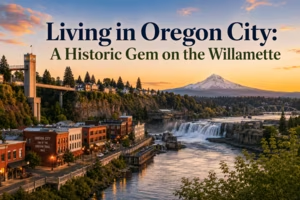
Perched dramatically along the bluffs of the Willamette River, Oregon City is a place where history isn’t just remembered-it is woven directly into the landscape. As the official “end of the Oregon Trail” and the first incorporated city west of the Rockies, this community carries a gritty, deeply authentic soul that sets it apart from any other Portland suburb.
Today, Oregon City is experiencing a brilliant renaissance. It gracefully balances its rugged, industrial roots with a creative, modern energy, making it an incredibly scenic and vibrant place to live. For those seeking a community with true character, stunning natural geography, and a slightly more relaxed pace of life, Oregon City stands out as a captivating destination.
About the Area: High Bluffs and Historic Roots
The geography of Oregon City is nothing short of spectacular. The town is physically divided into two main levels by a massive, 90-foot basalt cliff. The lower shelf hugs the riverbank and houses the historic downtown district, while the upper tier opens up into expansive, tree-lined residential neighborhoods that stretch toward the Cascade foothills.
Connecting these two distinct worlds is the famous Oregon City Municipal Elevator. Operating as one of only a handful of outdoor municipal elevators in the world-and the only vertical street in North America-this iconic, mid-century tower is a beloved daily transit point for locals and a striking landmark on the city’s skyline.
The local climate features the classic Pacific Northwest rhythm of warm, golden summers and soft, misty winters. The dramatic topography means many hillside homes enjoy sweeping views of the river below, the surrounding forests, and on pristine days, the snow-covered peak of Mount Hood rising in the distance.
Local Attractions and a Booming Downtown
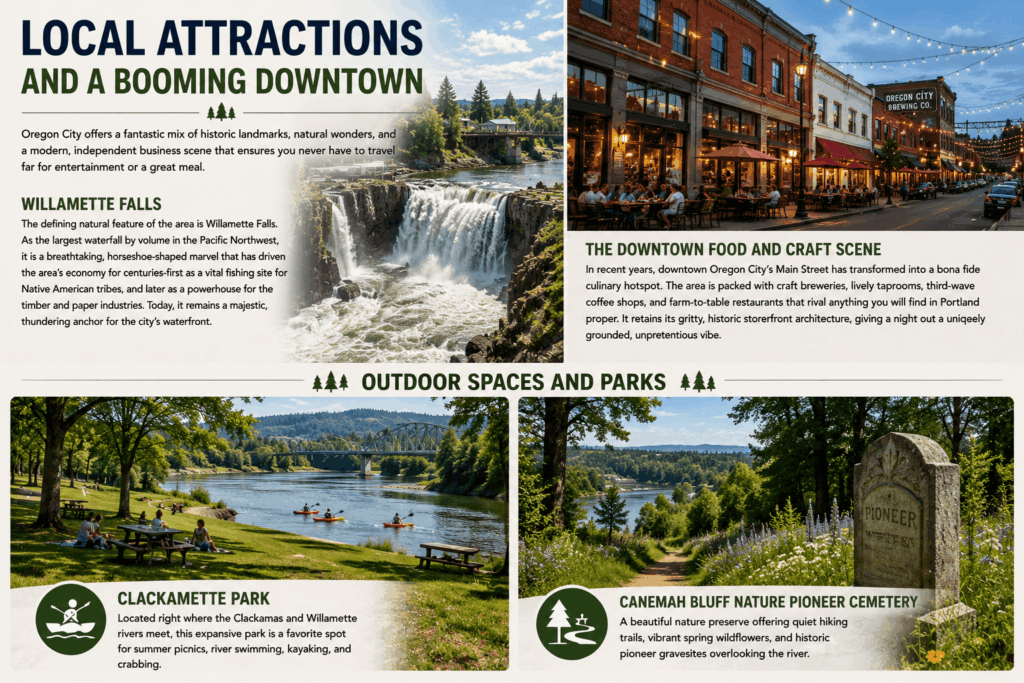
Oregon City offers a fantastic mix of historic landmarks, natural wonders, and a modern, independent business scene that ensures you never have to travel far for entertainment or a great meal.
Willamette Falls
The defining natural feature of the area is Willamette Falls. As the largest waterfall by volume in the Pacific Northwest, it is a breathtaking, horseshoe-shaped marvel that has driven the area’s economy for centuries-first as a vital fishing site for Native American tribes, and later as a powerhouse for the timber and paper industries. Today, it remains a majestic, thundering anchor for the city’s waterfront.
The Downtown Food and Craft Scene
In recent years, downtown Oregon City’s Main Street has transformed into a bona fide culinary hotspot. The area is packed with craft breweries, lively taprooms, third-wave coffee shops, and farm-to-table restaurants that rival anything you will find in Portland proper. It retains its gritty, historic storefront architecture, giving a night out a uniquely grounded, unpretentious vibe.
Outdoor Spaces and Parks
- Clackamette Park: Located right where the Clackamas and Willamette rivers meet, this expansive park is a favorite spot for summer picnics, river swimming, kayaking, and crabbing.
- Canemah Bluff Nature Pioneer Cemetery: A beautiful nature preserve offering quiet hiking trails, vibrant spring wildflowers, and historic pioneer gravesites overlooking the river.
Seasonal Changes and the Local Lifestyle
Life in Oregon City is deeply connected to the seasons and the outdoors. Springtime brings an explosion of color to the historic neighborhoods, and the Oregon City Farmers Market begins filling up with fresh local goods, plant starts, and artisanal treats from the surrounding valley.
Summer is a celebration of the rivers. Locals head to the water to paddleboard, fish, or float, and downtown streets fill with outdoor diners. Autumn brings a crisp, moody beauty to the basalt cliffs, making it the perfect time to explore local historical museums like the End of the Oregon Trail Interpretive Center, where the iconic giant covered wagons mark the journey of early pioneers. In the winter, the community gathers for cozy tree lightings and stays warm inside the city’s many bustling taprooms and cafes.
Why People Choose Oregon City
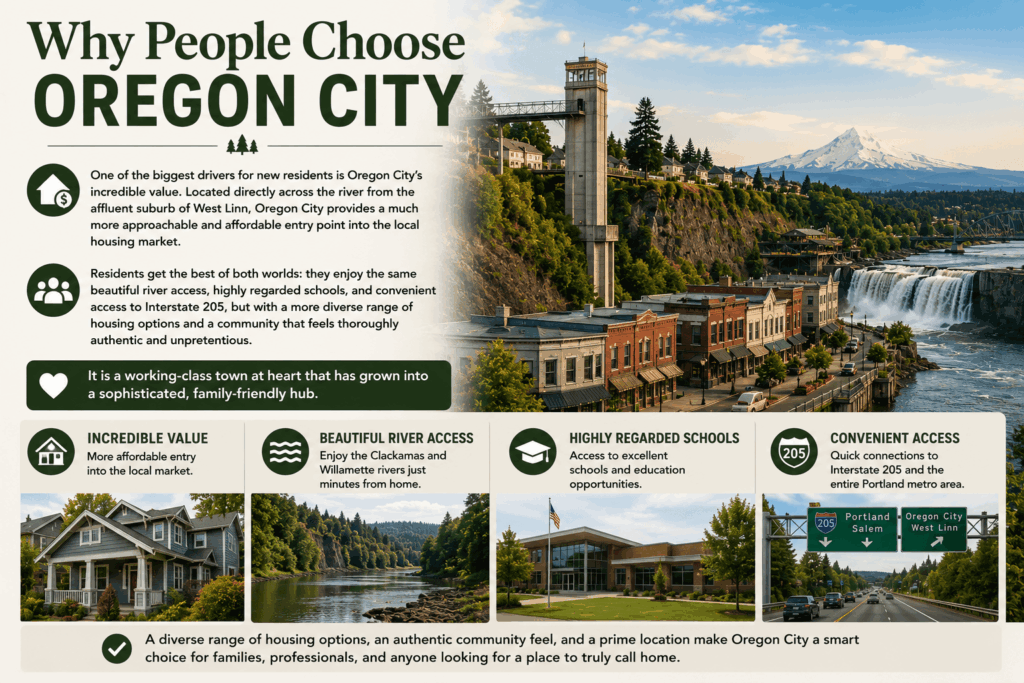
One of the biggest drivers for new residents is Oregon City’s incredible value. Located directly across the river from the affluent suburb of West Linn, Oregon City provides a much more approachable and affordable entry point into the local housing market.
Residents get the best of both worlds: they enjoy the same beautiful river access, highly regarded schools, and convenient access to Interstate 205, but with a more diverse range of housing options and a community that feels thoroughly authentic and unpretentious. It is a working-class town at heart that has grown into a sophisticated, family-friendly hub.
Helpful Tips for Residents and Visitors
- Take the Elevator: Skip trying to find parking on both levels. Park downtown, take the free municipal elevator to the top bluff for incredible views, and walk the historic promenade.
- Beat the Highway Traffic: I-205 can get backed up near the Abernethy Bridge during afternoon rush hour. If you are traveling locally, utilizing Highway 99E or the historic Arch Bridge over to West Linn can offer a much more scenic bypass.
- Explore the History: Take an afternoon to explore the McLoughlin House and the surrounding historic conservation district to truly appreciate the deep nineteenth-century roots of the neighborhood.
Conclusion
Oregon City is a place that honors its rugged past while enthusiastically embracing its bright future. It offers a rare combination of dramatic natural scenery, deep historical significance, a thriving local economy, and an approachable cost of living. For anyone searching for a community with grit, character, and a welcoming spirit, the end of the Oregon Trail might just be the perfect place to start a new chapter.
Frequently Asked Questions
What makes Oregon City historically significant?
Oregon City carries immense historical value as the official “end of the Oregon Trail” and the very first incorporated city located west of the Rocky Mountains. It served as a massive hub for early pioneer settlement in the nineteenth century.
What is the Oregon City Municipal Elevator?
The Oregon City Municipal Elevator is a famous 90-foot mid-century tower that physically connects the town’s lower riverbank shelf (the downtown district) with its upper residential bluff level. It is one of only a handful of outdoor municipal elevators in the world and operates as the only “vertical street” in North America.
Why is Willamette Falls important to the area?
Willamette Falls is the largest waterfall by volume in the Pacific Northwest. This massive horseshoe-shaped natural wonder served as a crucial native fishing location for local tribes for centuries, before eventually acting as a central power source for the region’s historic brick, timber, and paper mills.
What museum marks the journey of early pioneers in Oregon City?
The End of the Oregon Trail Interpretive Center is the city’s premier historical museum. It is easily recognizable by its massive architecture shaped like giant covered wagons and offers immersive exhibits detailing the cross-country treks of early settlers.
What recreational activities can you do at Clackamette Park?
Clackamette Park is situated directly at the scenic confluence of the Clackamas and Willamette rivers. The spacious park is a highly popular destination for outdoor recreation, including summer picnicking, river swimming, kayaking, paddleboarding, and seasonal crabbing or fishing.
Where can you find nature trails and pioneer history in a single location?
The Canemah Bluff Nature Reserve offers a beautiful combination of both. Visitors can explore quiet wooded hiking trails that erupt with vibrant wild blooms in the spring, alongside an adjacent historic pioneer cemetery overlooking the river canyon below.
How does the cost of housing in Oregon City compare to its neighbors?
Oregon City is highly valued for offering a much more approachable and affordable price point into the local real estate market compared to its affluent neighbors directly across the river, such as West Linn. It provides excellent infrastructure, historic charm, and river access with a diverse, unpretentious housing stock.
What is the downtown culinary scene like on Main Street?
Downtown Oregon City has undergone a massive renaissance, transforming into a prominent culinary destination. The historic storefront architecture now houses a dense mix of local craft breweries, bustling taprooms, independent third-wave coffee roasters, and farm-to-table restaurants.
What is a helpful transit tip for avoiding rush hour gridlock on Interstate 205?
Interstate 205 frequently experiences heavy bottlenecks and severe backups near the Abernethy Bridge during afternoon commute times. Local drivers often bypass the highway gridlock by utilizing secondary routes like Highway 99E or taking the historic Arch Bridge over into West Linn.
What historic home can you visit to learn about early city leadership?
Visitors can tour the McLoughlin House, which is preserved within a historic conservation district on the upper bluff. It is the former home of Dr. John McLoughlin, a prominent historical figure often referred to as the “Father of Oregon” due to his role in guiding early pioneer settlements.

0 Comments