
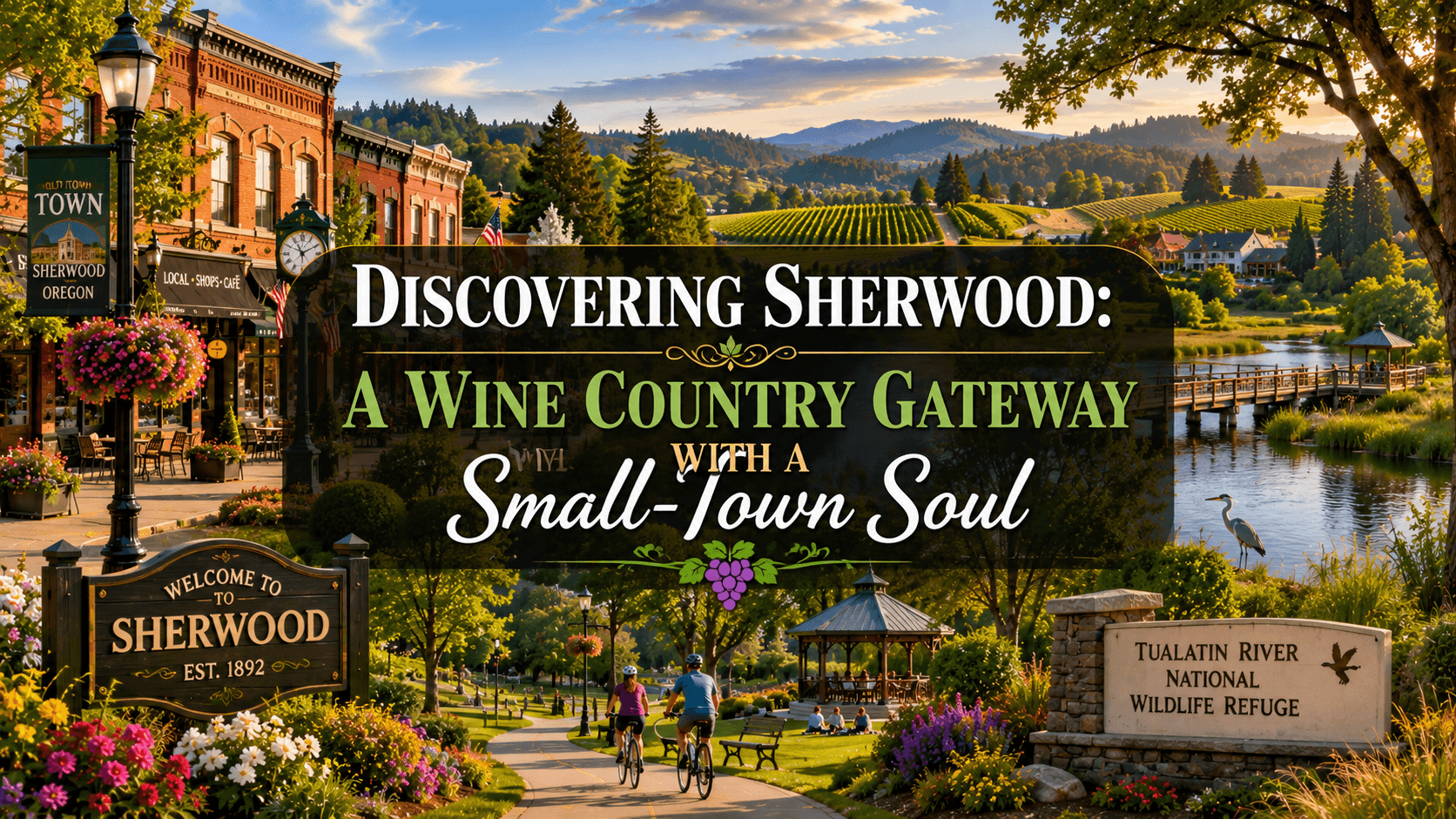
There is an undeniable warmth that defines Sherwood, Oregon. Located roughly 17 miles southwest of downtown Portland, this picturesque community marks the spot where the outer edge of the metropolitan area softens into the rolling hills of the Willamette Valley wine country. While Sherwood has grown steadily over the years, it has intentionally held onto its small-town identity. It is a city where brick-paved historic streets lead to sprawling neighborhood parks, and where community festivals still bring the entire town together.
About the Area: A Community Nestled in Nature
Sherwood’s unique geography places it right at the transition point between urban convenience and rural beauty. The northern edge of the city borders the lush Tualatin River basin, while the southern ridges climb gently toward Chehalem Mountain.
The city features a mix of historic residential sectors and modern, family-oriented developments.
- Old Town Sherwood: The historic heart of the city, characterized by its beautifully preserved early 20th-century architecture, walkable sidewalks, and independent storefronts.
- Woodhaven: A highly popular master-planned neighborhood known for its wide, tree-lined streets, contemporary homes, and an extensive network of interconnected walking and biking paths.
- Sherwood View and Edy Ridge: Elevated areas featuring spacious homes, manicured lawns, and sweeping views of the surrounding valley.
The local climate features gorgeous, sun-drenched summers with temperatures comfortably lingering in the low 80s—perfect for the regional vineyards. Winters are mild but wet, bringing the classic Pacific Northwest drizzle that keeps the local forests and agricultural lands thriving.
Local Attractions and Nearby Destinations
From protected natural wetlands to vibrant cultural hubs, Sherwood offers a variety of spaces that make it easy to love living here.
Old Town and the Arts
The historic six-block core of Old Town Sherwood serves as the community’s primary gathering place. Here, you can spend an afternoon browsing local antique shops, picking out a title at the library, or grabbing a bite at a family-owned eatery. Just a short walk down the street is the modern Sherwood Center for the Arts, a bustling hub that hosts live theater, art galleries, and creative classes for all ages.
Parks and Wildlife Sanctuaries
For outdoor lovers, Sherwood provides direct access to some of the region’s finest natural habitats.
- Tualatin River National Wildlife Refuge: Situated right on the edge of the city, this massive seasonal wetland sanctuary is a haven for hikers and birdwatchers. Paved and gravel trails weave through the refuge, offering chances to spot deer, beavers, herons, and migratory waterfowl.
- Stella Olsen Memorial Park: Located directly adjacent to Old Town, this beautiful park sits nestled in a wooded creek basin. It features a large children’s playground, a scenic picnic pavilion, and an outdoor amphitheater.
- Snyder Park: A massive active recreation space complete with top-tier soccer and baseball fields, walking loops, and a popular playground area.
Seasonal Changes and Local Lifestyle
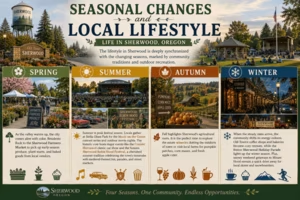
The lifestyle in Sherwood is deeply synchronized with the changing seasons, marked by community traditions and outdoor recreation.
- Spring: As the valley warms up, the city comes alive with color. Residents flock to the Sherwood Farmers Market to pick up early-season produce, plant starts, and baked goods from local vendors.
- Summer: Summer is peak festival season. Locals gather at Stella Olsen Park for the Music on the Green concert series and outdoor movie nights. The historic core hosts major events like the Cruisin’ Sherwood classic car show and the famous Sherwood Robin Hood Festival, a cherished summer tradition celebrating the town’s namesake with medieval-themed fun, parades, and street markets.
- Autumn: Fall highlights Sherwood’s agricultural roots. It is the perfect time to explore the estate wineries dotting the outskirts of town or visit local farms for pumpkin patches, corn mazes, and fresh apple cider.
- Winter: When the steady rains arrive, the community shifts its energy indoors. Old Town’s coffee shops and bakeries become cozy retreats, while the festive Sherwood Holiday Parade lights up the winter season. Plus, snowy weekend getaway
Why People Enjoy the Area
Sherwood is highly sought after by those who prioritize a quiet, safe, and family-first environment without entirely disconnecting from the city. The Sherwood School District is consistently ranked among the absolute best in the state of Oregon, serving as a significant draw for growing families.
The town’s layout prevents heavy commercial congestion, meaning shopping hubs along Highway 99W are concentrated and easily accessible without intruding on the peace of residential neighborhoods. With its minimal crime rates, strong civic pride, and a commute that gets you into downtown Portland or Beaverton in about 30 to 40 minutes, Sherwood strikes a rare and ideal balance of Pacific Northwest living.
Helpful Tips for Visitors and Residents
- Start at the Arts Center: If you are attending one of the bi-annual Old Town Sherwood Art Walks, always make the Sherwood Center for the Arts your first stop to grab an event map and enter local prize raffles.
- Bring the Binoculars: When visiting the Tualatin River National Wildlife Refuge, time your walks for early morning or dusk to maximize your chances of spotting active local wildlife.
- Watch the Commute: Highway 99W is the main artery connecting Sherwood to the rest of the Portland metro area. Traffic can stack up during peak morning and evening rush hours, so plan your travel accordingly or take scenic backroads through the wine country.
Conclusion
Sherwood successfully captures what so many people look for in a Pacific Northwest community: safety, excellent schools, beautiful green spaces, and an authentic small-town heartbeat. It is a city that feels private and preserved, yet remains completely connected to the broader culture and economy of the region. Whether you are strolling past the historic brick buildings of Old Town, watching the sunset over the wetlands, or exploring a world-class vineyard right outside city limits, Sherwood feels less like a typical suburb and more like home.
Frequently Asked Questions
Where is Sherwood, Oregon located, and what is its regional identity?
Sherwood is situated approximately 17 miles southwest of downtown Portland. The city serves as a scenic geographic transition point, marking the exact zone where the outer edge of the Portland metropolitan area softens into the rolling hills and vineyards of the Willamette Valley wine country.
What are the primary neighborhoods in Sherwood, and how do they differ?
Sherwood features a diverse mix of historic residential zones and contemporary master-planned developments, including:
-
Old Town Sherwood: The historic six-block core of the city, defined by its walkable sidewalks, independent storefronts, and beautifully preserved early 20th-century architecture.
-
Woodhaven: A highly popular master-planned community characterized by wide, tree-lined streets, contemporary homes, and an extensive network of interconnected walking and biking paths.
-
Sherwood View and Edy Ridge: Elevated residential sectors featuring spacious homes, manicured lawns, and sweeping views of the surrounding valley.
What is the Sherwood Center for the Arts, and how does it serve the community?
Located just a short walk from the historic core, the Sherwood Center for the Arts is a modern cultural hub that hosts live theater, art galleries, and creative classes for all ages. It also serves as the official starting point for the bi-annual Old Town Sherwood Art Walks, where visitors can pop in to pick up event maps and enter local prize raffles.
What natural outdoor highlights can be found at the Tualatin River National Wildlife Refuge?
Situated right on the edge of the city limits, this massive seasonal wetland sanctuary is a haven for outdoor enthusiasts. A mix of paved and gravel trails weave through the refuge, offering hikers and birdwatchers a prime opportunity to spot deer, beavers, herons, and migratory waterfowl.
Pro Tip: To maximize your chances of spotting active local wildlife, time your visits for early morning or dusk, and don’t forget to pack a solid pair of binoculars.
What are the differences between Stella Olsen Memorial Park and Snyder Park?
-
Stella Olsen Memorial Park: Nestled directly adjacent to Old Town in a wooded creek basin, this park features a large children’s playground, a scenic picnic pavilion, and an outdoor amphitheater that serves as the home base for community movie nights and the Music on the Green summer concert series.
-
Snyder Park: A massive active recreation space tailored for sports enthusiasts, completely equipped with top-tier soccer and baseball fields, open walking loops, and a popular playground area.
What unique events define Sherwood's summer festival season?
Summer is peak festival season in Sherwood, driven by an active community spirit. The historic core and local parks play host to several signature traditions, including:
-
The Music on the Green concert series.
-
The Cruisin’ Sherwood classic car show.
-
The famous Sherwood Robin Hood Festival, a long-standing summer tradition that celebrates the town’s namesake with parades, street markets, and medieval-themed fun.
How does daily life in Sherwood shift during the autumn and winter months?
-
Autumn: The local lifestyle highlights Sherwood’s agricultural roots. Residents spend their weekends exploring the estate wineries dotting the outskirts of town or visiting family farms for pumpkin patches, corn mazes, and fresh apple cider.
-
Winter: As the classic Pacific Northwest rain sets in, the community shifts its energy indoors to Old Town’s cozy coffee shops and bakeries. The season is highlighted by the festive Sherwood Holiday Parade, while skiers and snowboarders take advantage of quick weekend trips to nearby Mount Hood.
Why is Sherwood considered a top destination for growing families?
The city is highly sought after by those who prioritize a quiet, safe, and family-first environment. A primary catalyst for the area’s high demand is the Sherwood School District, which is consistently ranked among the absolute best public school systems in the state of Oregon.
How does the city’s layout manage commercial traffic and noise?
Sherwood’s smart layout intentionally prevents heavy commercial congestion from spilling into residential areas. Major shopping hubs are tightly concentrated along the Highway 99W corridor, making daily necessities easily accessible while ensuring that local residential blocks remain peaceful, quiet, and exceptionally safe.
What should commuters know about traveling to Portland or Beaverton from Sherwood?
Commuter Advisory: Highway 99W serves as the main transit artery linking Sherwood to the broader Portland metro area.
Because traffic can stack up significantly during peak morning and evening rush hours, it is wise to plan your travel around peak times or opt for the scenic backroads winding through the wine country. Under normal driving conditions, a commute into downtown Portland or Beaverton takes roughly 30 to 40 minutes.
0 Comments