
When exploring Portland, Oregon, it is easy to get captivated by what is right in front of you: the thriving food cart pods, the sprawling greenery of Washington Park, or the stunning backdrop of Mount Hood on a clear day. However, some of the city’s most fascinating history lies completely out of sight, directly beneath the bustling streets of the Old Town Chinatown neighborhood.
Known locally as the Shanghai Tunnels, this intricate network of subterranean basements and interconnected passageways dates back to Portland’s early days as a booming, rough-and-tumble Pacific Northwest port city. Today, these passages offer a compelling glimpse into the gritty history, maritime lore, and local legends that shaped the Rose City long before it became the modern cultural hub we know today.
About the Location: The Subterranean Heart of Old Town
The Shanghai Tunnels are not a modern transit system or a single continuous tunnel, but rather a series of connected basements beneath the historic brick buildings of Portland’s original downtown core. During the late 19th and early 20th centuries, Portland was one of the busiest and most dangerous ports on the West Coast.
The Functional Underground
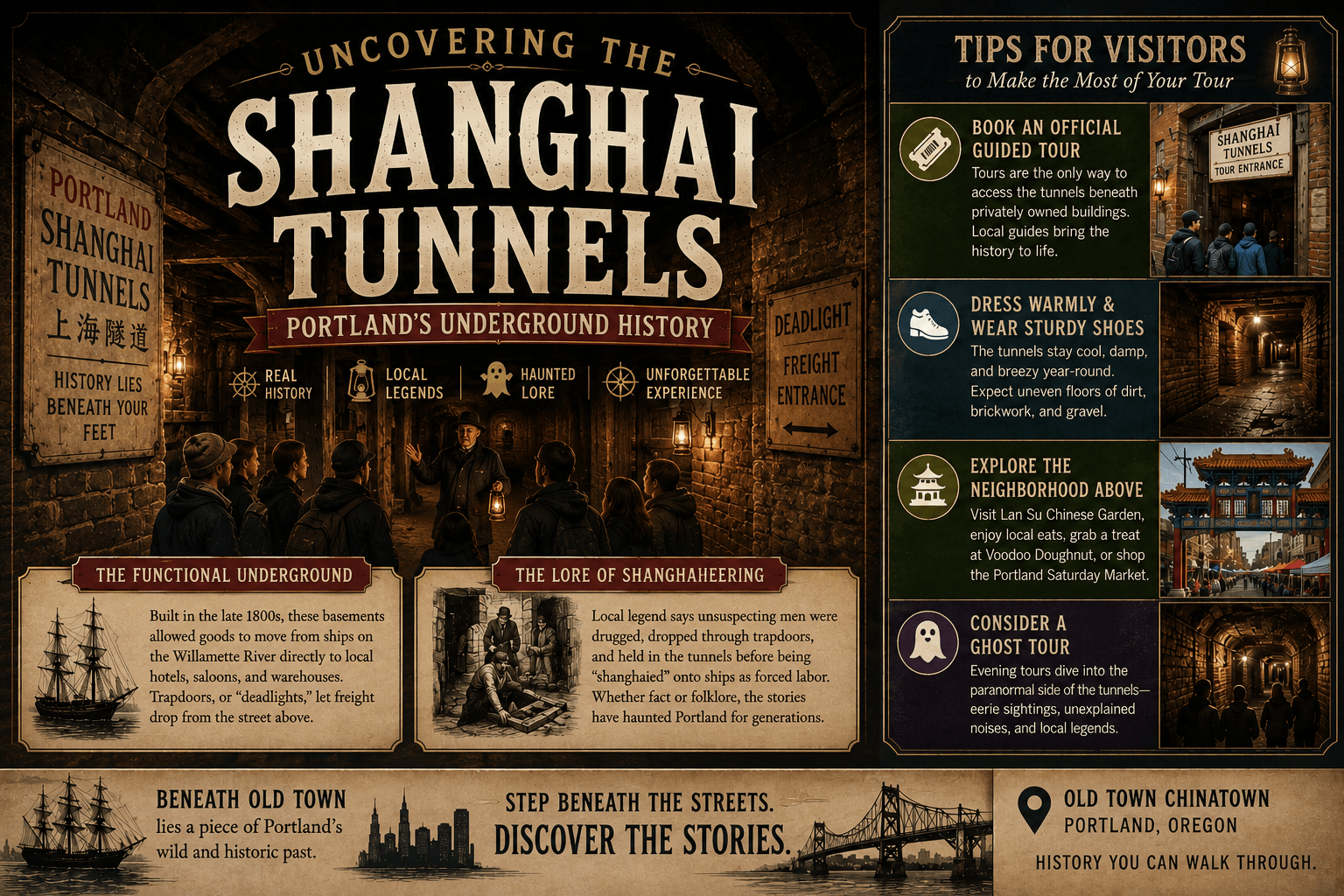
Originally built for practical commercial purposes, these tunnels allowed merchants and laborers to move goods directly from ships docked on the Willamette River straight to the basements of local hotels, saloons, and warehouses. This underground network kept heavy freight off the muddy, congested streets above and protected valuable cargo from the frequent Pacific Northwest rain. Trapdoors, known as “deadlights,” were built into the sidewalks, allowing goods to be dropped directly into the basements from horse-drawn wagons.
The Lore of Shanghaieering
Over the decades, the tunnels became intertwined with darker local lore. According to popular Portland legend, the passageways were used for “shanghaiing” the illegal practice of kidnapping unsuspecting men to serve as forced labor on outbound merchant ships.
Unfortunate sailors, loggers, or travelers drinking at local saloons were allegedly slipped drafts, dropped through hidden trapdoors into the basements, and held in makeshift cells before being rowed out to the river. While historians continue to debate the true scale of the practice, the stories have cemented the tunnels’ reputation as one of the most haunted and mysterious locations in Oregon.
Helpful Tips for Visitors and Residents
If you are a resident looking to explore your city’s roots or a visitor seeking an off-the-beaten-path adventure, here are practical insights to plan your journey underground:
- Book an Official Guided Tour: Because the tunnels are located beneath privately owned historic buildings, you cannot explore them on your own. Booking a walking tour through an established local historical group is the only way to gain access. These tours often start in the basement of a local business and are led by passionate local guides who bring the era to life.
- Dress Warmly and Wear Sturdy Shoes: Even during Portland’s warm, dry summer months, the temperature beneath the streets remains consistently cool, damp, and breezy. Wear a light jacket or layers, and opt for closed-toe walking shoes, as the tunnel floors consist of uneven dirt, old brickwork, and packed gravel.
- Explore the Neighborhood Above: Make a day of your trip by exploring Old Town Chinatown before or after your tour. You can walk through the stunning Lan Su Chinese Garden, grab a legendary pastry at Voodoo Doughnut, or browse the weekend artisan stalls at the outdoor Portland Saturday Market right along the Tom McCall Waterfront Park.
- Consider a Ghost Tour: If you enjoy the spooky side of history, look into evening paranormal tours. The tunnels are a staple of Pacific Northwest ghost lore, and special nighttime walks focus heavily on the eerie sightings, unexplained noises, and spiritual legends reported by business owners over the years.


Conclusion
The Shanghai Tunnels stand as an important, tangible reminder of Portland’s complex and colorful evolution. They show that beneath the polished exterior of today’s bike lanes, independent coffee shops, and eco-conscious neighborhoods lies the foundational footprint of a wild, gritty 19th-century seaport. By stepping beneath the historic brick facades of Old Town, you get to connect with a side of the city that textbooks cannot fully capture making it an unforgettable highlight of the true Pacific Northwest lifestyle.
Frequently Asked Questions
What exactly are the Shanghai Tunnels and where are they located?
The Shanghai Tunnels are an intricate network of subterranean basements and interconnected passageways dating back to Portland’s early days as a rough-and-tumble port city. Rather than a modern transit system, they are a series of connected basements located directly beneath the historic brick buildings of Portland’s Old Town Chinatown neighborhood.
What was the original practical purpose of this underground network?
Originally built for commercial efficiency, the tunnels allowed late 19th- and early 20th-century merchants and laborers to move goods directly from ships docked on the Willamette River straight into the basements of local warehouses, saloons, and hotels. This kept heavy freight off the muddy, congested streets above and protected valuable cargo from the frequent Pacific Northwest rain.
What are "deadlights" and how were they used?
“Deadlights” were specialized trapdoors built right into the city sidewalks. They allowed workers to unload cargo from horse-drawn wagons and drop it directly down into the basement network below for quick, sheltered storage.
What does the dark lore of "shanghaiing" actually refer to?
The Maritime Lore: “Shanghaiing” refers to the illegal practice of kidnapping unsuspecting men to serve as forced labor on outbound merchant ships.
According to popular local legend, Portland’s underground tunnels became a primary operational hub for this illicit trade due to the city’s reputation as one of the busiest and most dangerous ports on the West Coast.
How were victims allegedly captured and held within the tunnels?
Unsuspecting sailors, loggers, or travelers drinking at local saloons were reportedly slipped sedating drafts and dropped through hidden trapdoors directly into the basements. They were then allegedly held in makeshift underground cells before being rowed out to waiting merchant ships on the river.
Do historians agree on the historical scale of the kidnapping stories?
No. While the dark legends have securely cemented the tunnels’ reputation as one of the most mysterious and haunted locations in Oregon, historians continue to debate the actual scale and frequency of the shanghaiing practice.
Can visitors explore the Shanghai Tunnels independently?
No. Because the tunnels are located entirely underneath privately owned historic buildings, independent exploration is strictly prohibited. The only way to gain access to the subterranean network is to book a walking tour through an established local historical group.
What should people wear when going on a tunnel tour?
Even during Portland’s warm and dry summer months, the subterranean environment remains consistently cool, damp, and breezy. Visitors are advised to:
-
Wear a light jacket or warm layers.
-
Opt for sturdy, closed-toe walking shoes, as the tunnel floors consist of highly uneven dirt, old brickwork, and packed gravel.
What other major Portland landmarks are located right above the tunnels?
You can easily make a full day out of your trip by exploring the surrounding Old Town Chinatown neighborhood. Nearby highlights include:
-
The stunning Lan Su Chinese Garden
-
The world-famous Voodoo Doughnut bakery
-
The outdoor Portland Saturday Market, which features local artisan stalls right along the Tom McCall Waterfront Park
Are there special tours available for fans of ghost stories and the supernatural?
Yes. Because the tunnels are a major staple of Pacific Northwest folklore, specialized evening paranormal and ghost tours are available. These nighttime walks focus heavily on the eerie sightings, unexplained noises, and spiritual legends that have been reported by local business owners over the years.
Next: Exploring the Willamette Valley: Oregon’s Rich Heart of Wine, Waterfalls, and Community



0 Comments