
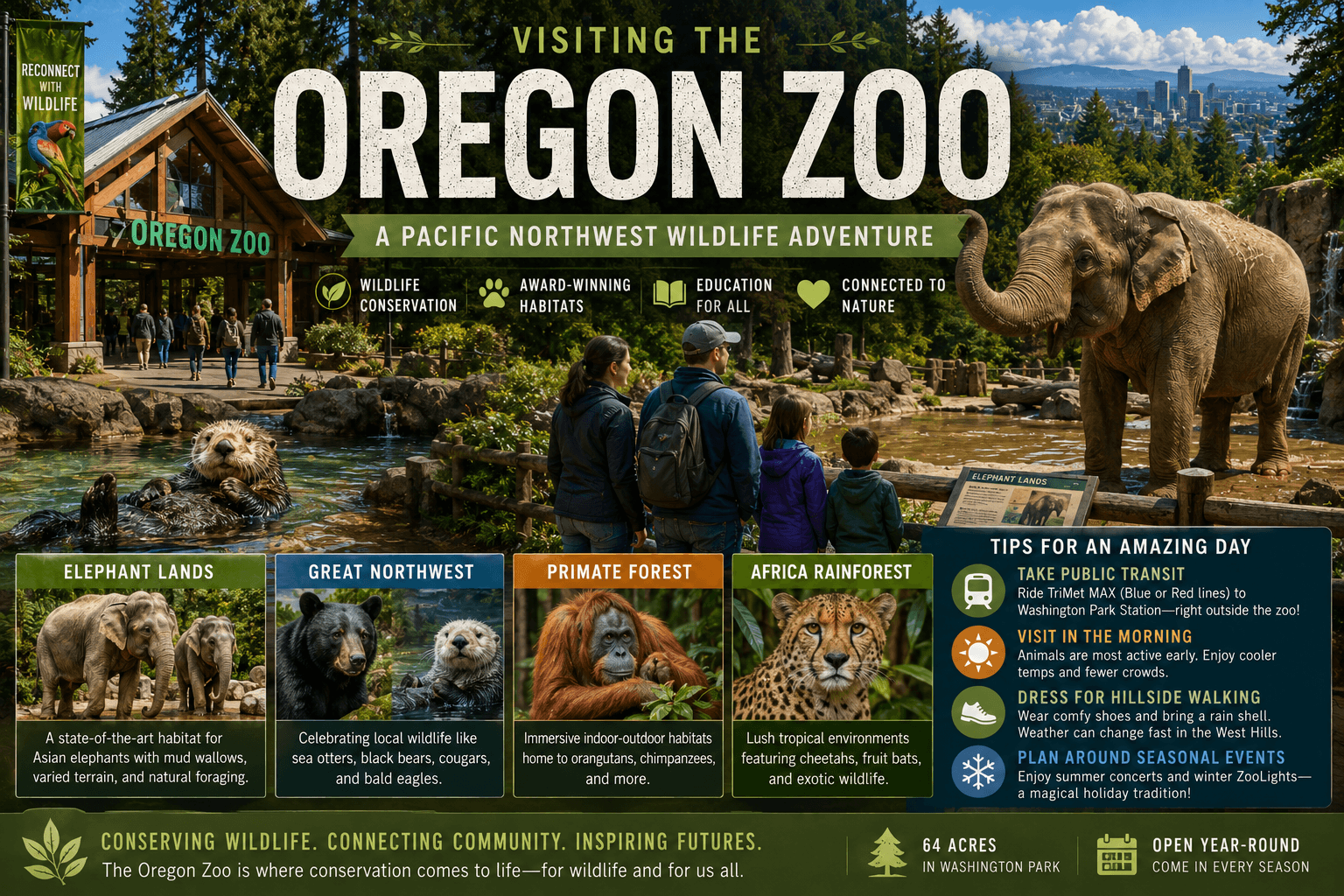
Tucked away in the scenic, tree-lined hills of Washington Park, just minutes from downtown Portland, the Oregon Zoo stands as one of the region’s most beloved and historic cultural institutions. Founded in 1888, it is the oldest continuously operating zoo west of the Mississippi River.
Rather than just a traditional animal showcase, the zoo has evolved into a world-class center for wildlife conservation, education, and animal welfare. It serves as a community anchor where generations of Pacific Northwest families, curious travelers, and nature enthusiasts gather to connect with the natural world. Surrounded by towering Douglas firs and lush coastal foliage, a walk through the zoo feels less like an urban attraction and more like an immersive trek through global ecosystems.
About the Location: A Forested Oasis in Washington Park
The Oregon Zoo covers 64 acres of rolling, forested hillside within Washington Park, a massive urban green space that also houses the International Rose Test Garden and the Portland Japanese Garden. The zoo’s unique geography integrates beautifully with the surrounding landscape, utilizing the natural slopes, canopy cover, and temperate climate of the Pacific Northwest to create spacious, naturalistic habitats.
Over the last decade, the zoo has undergone massive, award-winning renovations to prioritize animal well-being and guest experience. The campus is thoughtfully organized into distinct, highly immersive ecological zones:
- Elephant Lands: A state-of-the-art, sprawling habitat designed specifically for the zoo’s famous herd of Asian elephants. It features varied terrain, massive mud wallows, and automated feeding stations that encourage natural foraging behaviors.
- Great Northwest: A local favorite that honors the zoo’s home region. This zone highlights native species like cougars, black bears, sea otters, and bald eagles, taking visitors through habitats that mimic the rugged Oregon Coast and the dense Cascade mountains.
- Primate Forest and Africa Rainforest: Vibrant, indoor-outdoor ecosystems that bring visitors face-to-face with chimpanzees, orangutans, cheetahs, and fruit bats, surrounded by lush, tropical landscaping.
The zoo operates in harmony with Portland’s distinct seasonal weather. The warm, dry summers are perfect for slow afternoon strolls, while the misty, cool winters bring a quiet, peaceful atmosphere where many cold-tolerant animals become highly active.
Helpful Tips for Visitors and Residents
To make the most of your day exploring the habitats, here are some practical local insights and seasonal tips:
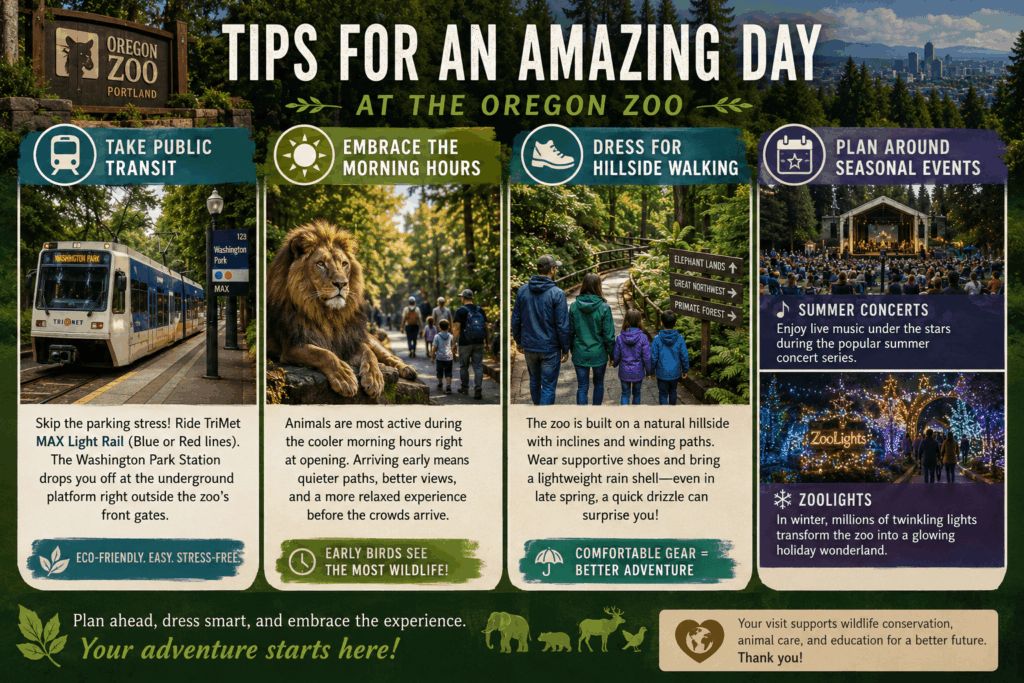
- Take Public Transit: Parking in the main Washington Park lot can fill up quickly, especially on sunny weekends and during summer holidays. Save yourself the stress by riding the TriMet MAX Light Rail (Blue or Red lines). The Washington Park Station drops you off at the underground platform right outside the zoo’s front gates.
- Embrace the Morning Hours: Animals are typically most active during the cooler morning hours right when the gates open. Arriving early also guarantees a quieter, more relaxed experience before the midday school groups and crowds arrive.
- Dress for Hillside Walking: The Oregon Zoo is built on a natural hillside, meaning there are plenty of inclines and winding paths. Wear supportive walking shoes and carry a lightweight rain shell—even in the late spring, a quick Pacific Northwest drizzle can roll over the west hills unexpectedly.
- Plan Around Seasonal Events: The lifestyle at the zoo shifts dynamically with the calendar. Summer brings the popular evening concert series, allowing locals to enjoy live music on the lawn. In the winter, the zoo hosts ZooLights, a spectacular holiday tradition where millions of twinkling LED lights transform the pathways into a glowing winter wonderland.
Conclusion
The Oregon Zoo successfully captures the eco-conscious, nature-loving spirit of Portland, OR. By balancing historic charm with cutting-edge habitat design and a deep commitment to global species survival, it offers an experience that is both profoundly educational and deeply entertaining. Whether you are watching sea otters dive through coastal waters, learning about local salmon conservation, or sipping a local craft brew while strolling through Elephant Lands, the zoo provides a memorable escape into the wild right in the city’s backyard.
Frequently Asked Questions
What is the historical significance of the Oregon Zoo?
Founded in 1888, the Oregon Zoo holds the proud title of the oldest continuously operating zoo west of the Mississippi River.
Where is the zoo located, and what is its layout like?
The zoo spans 64 acres of rolling, forested hillside tucked inside Portland’s Washington Park (which also houses the International Rose Test Garden and the Portland Japanese Garden). Surrounded by towering Douglas firs and lush coastal foliage, the campus integrates its exhibits with the natural slopes and canopy of the Pacific Northwest.
What makes "Elephant Lands" a state-of-the-art habitat?
Built specifically for the zoo’s famous herd of Asian elephants, Elephant Lands is a sprawling habitat engineered to prioritize natural animal behaviors. It features:
-
Varied, rolling terrain
-
Massive mud wallows
-
Automated feeding stations designed to encourage active, natural foraging
Which animals can visitors see in the "Great Northwest" zone?
As a local favorite that honors the home region, the Great Northwest zone highlights native species by mimicking the rugged Oregon Coast and the dense Cascade mountains. Visitors here can observe cougars, black bears, sea otters, and bald eagles.
What other global ecosystems can be explored on the campus?
Beyond local wildlife, visitors can venture into vibrant indoor-outdoor ecosystems including the Primate Forest and Africa Rainforest.
Why is public transit recommended for getting to the zoo?
Parking spaces in the main Washington Park lot fill up incredibly fast, particularly on sunny weekends and summer holidays. To skip the traffic and parking stress, you can ride the TriMet MAX Light Rail (Blue or Red lines); the Washington Park Station drops you off at an underground platform located right outside the zoo’s front gates.
What is the best time of day to view active animals?
Insider Tip: Embrace the morning hours! Animals are typically at their most active during the cooler morning windows right when the gates open. Showing up early also guarantees a much quieter, more relaxed experience before midday crowds and school groups arrive.
What should visitors wear or pack for a trip to the zoo?
Because the zoo is constructed on a natural hillside, you will be navigating plenty of steep inclines and winding pathways. It is best to wear supportive walking shoes and carry a lightweight rain shell even in late spring, a quick Pacific Northwest drizzle can roll over the west hills completely unannounced.
What signature community event does the zoo host during the summer?
When the warm, dry summer months roll in, the zoo shifts its schedule to host a highly popular evening concert series. This event allows locals and travelers to gather on the lawn to enjoy live music and local craft brews in a unique outdoor setting.
What is "ZooLights," and when does it take place?
ZooLights is a spectacular holiday tradition hosted during the winter months.

0 Comments